On the battlefield of social media, “freedom of speech” is thrown around as an indestructible shield — defense for hot takes, offensive jokes and controversial opinions.
While the First Amendment protects citizens from legal consequences, professional consequences are not only allowed, but prevalent in light of recent events.
In the wake of the assassination of conservative public figure and podcaster Charlie Kirk, many took to social media to express their perspective, from anonymous usernames to high-profile politicians.
Somewhere in that range, lies a specific profession that faced harsher disciplinary consequences than others: teachers.
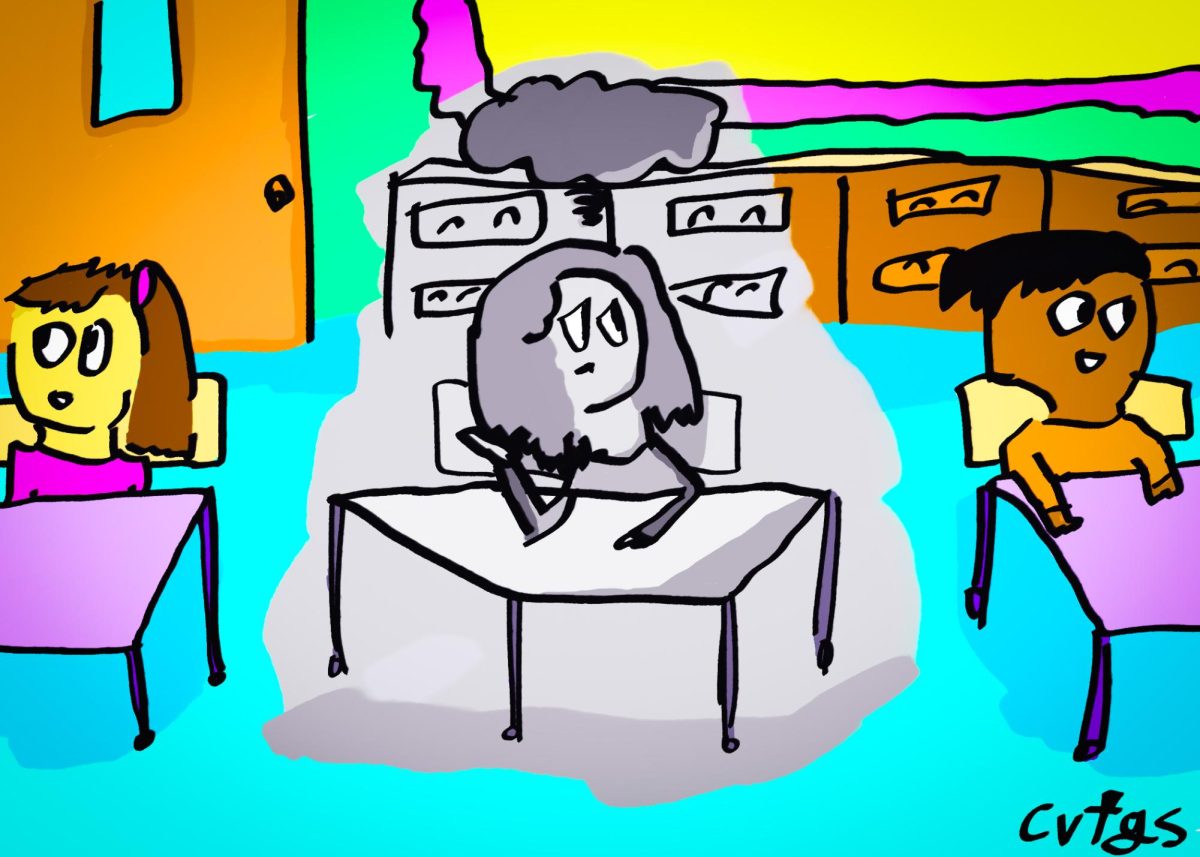
We live in a right-to-work state, where employers have higher relative freedom in terminating employees. As some teachers chose to post their opinions, following their right to freedom of speech, they were held to a significantly higher standard.
Unfair? Yes.
Valid? Also, yes.
In Texas, around 350 complaints have been filed against teachers for said comments, with some resulting in drastic consequences such as termination. Just as teachers are able to legally post their opinions, school administrations are able to legally discipline teachers that do not align with their values, offline and online.
The case of Macrae v. Mattos set precedent that schools are within their right to evaluate a teacher’s employment based on their online presence. In this case, a teacher’s social media activity was reviewed during her application process, and her inappropriate comments on social media were viewed as a disruption to the school environment at Hanover High School.
Even outside of work hours, school districts should be able to protect their reputation and values.
“You’re allowed to say what you want, but that doesn’t mean your job has to support it,” Coppell High School AP Government teacher Eric Chastain said. “Freedom doesn’t come without consequences.”
However, this issue presents itself in the media as well. In September, popular ABC host Jimmy Kimmel had his show temporarily suspended for his controversial political commentary.
Given the influence of public figures and the importance of media publications to maintain viewership, this is a valid course of action.
It is not the job of talk show hosts to make controversial comments at a time of national political unrest. His employer, Walt Disney Company, was simply protecting its image by adhering to the public backlash.
“Whether it’s Jimmy Kimmel or a social studies teacher — if you say something that makes your organization look bad, they can act on it,” Chastain said.
This is reality: public trust and professionalism are part of many jobs. When you post opinions on social media, you’re expanding your platform to the world, and the world will likely have a problem with it.
Real world actions come with real world aftermaths.
This logic can be further applied to students entering college. Though they are not yet employees, online behavior has increasingly played a part in their application processes.
Colleges are not under any obligation to ignore an applicant’s social media. In fact, many admissions officers openly admit to looking at online profiles to gain a sense of their character.
Colleges don’t just admit GPAs or SAT scores, they admit people — people that are fully capable of contradicting college values online, tarnishing their reputation.
This does not mean students should be terrified to voice their opinions online, but they should recognize the outreach of their posts.
The consequences of statements posted online can reverberate in application processes, jobs and social standards. Teachers, public figures and students are especially vulnerable to these consequences because they are looked at through a closer lens.
Regardless of whether this is fair, it is the world we live in. People are able to complain about any mildly controversial opinion, and most employers are simply trying to avoid negative publicity.
The art of staying neutral and diplomatic in platforms accessible to billions is simply an expectation for many occupations.
This does not silence people, it simply holds them liable to principles.
However, this issue isn’t black and white; that is where most run into issues because there is no list of statements, excluding hate speech or inciting violence, that warrants a disciplinary outcome. There are gray areas that accompany these risks, which is why proceeding with caution online is important.
Individual perception shapes meaning: someone’s belief can be someone else’s boundary.
Online speech opens individuals to scrutiny. In Coppell, where educators are expected to model professionalism and students are preparing to enter the real world, the impact of words cannot be ignored.
Follow @CHSCampusNews on X