In a digitalized world, shopping is another aspect shifting online along with several others. The speed, convenience and doorstep delivery make it optimized, but at the cost of something crucial: a tangible experience.
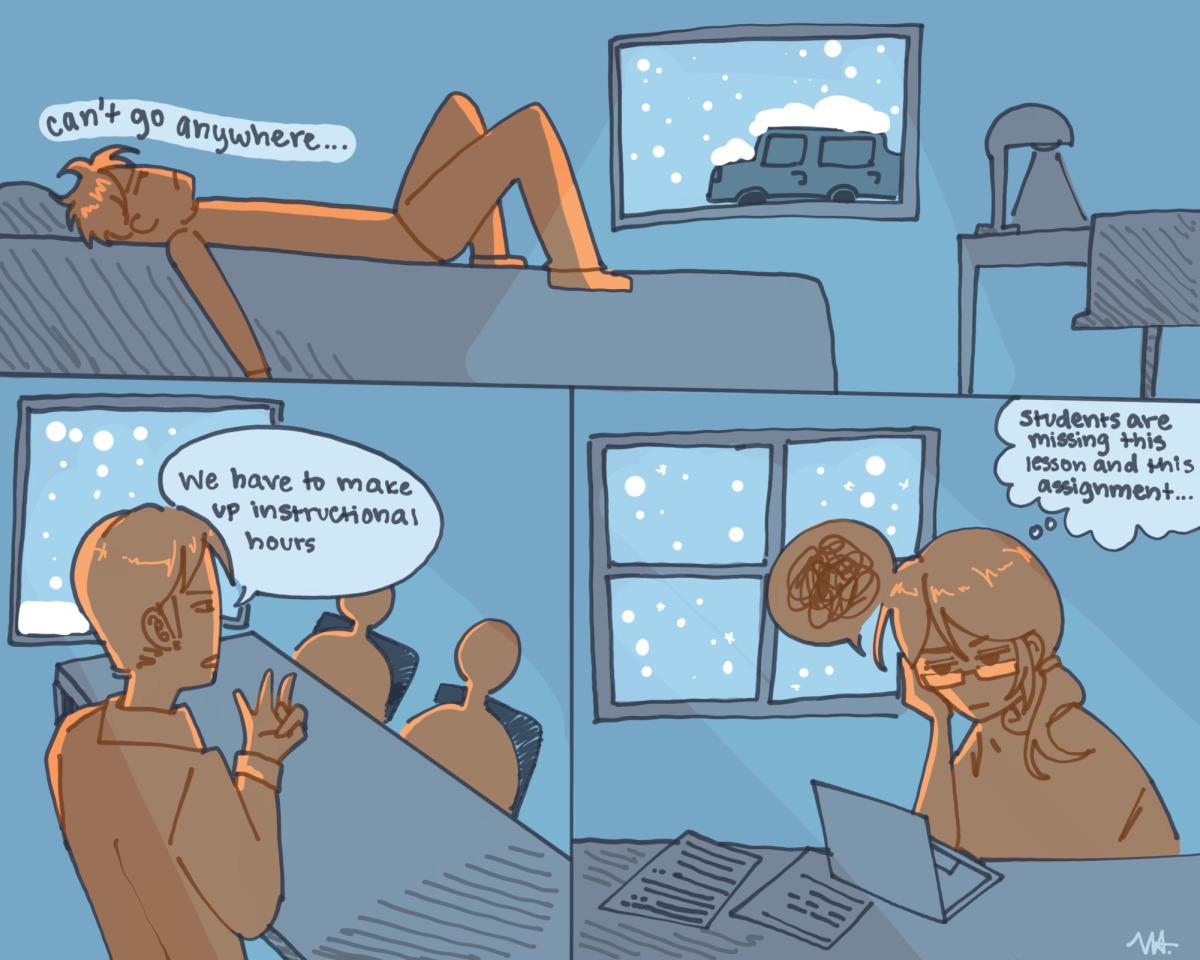
During the COVID-19 pandemic, several turned to online classes as an effective method of learning and while ultimately taught the same material, the experience was vastly unsatisfying.
Only 28% of teen students were satisfied with virtual learning, and this dissatisfaction doesn’t stem from the learning part of it, but more of the physical isolation.
Similar to the pandemic scenario, though ultimately purchasing the same things, online and offline shopping have multifaceted psychological effects that contribute to impacts often ignored by the public.
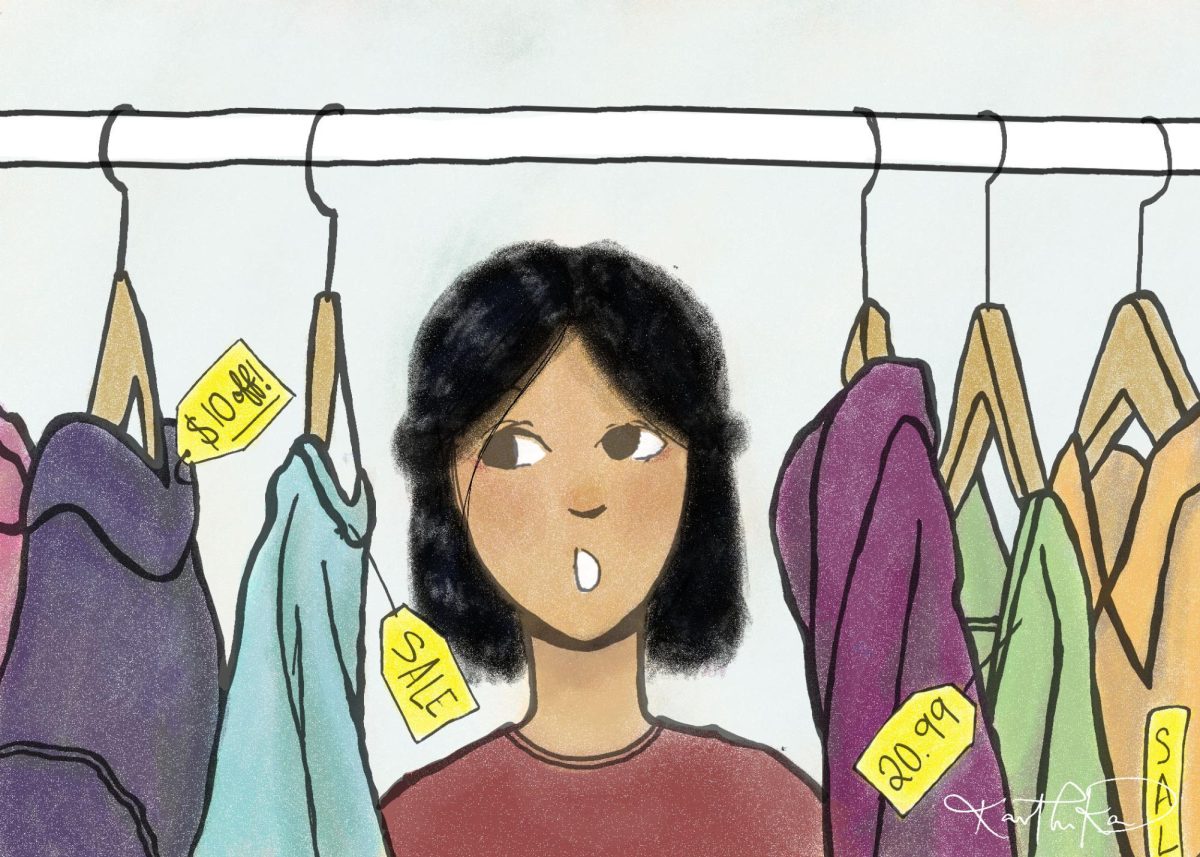
One of the biggest advantages of offline shopping is the ability to see, feel and try products prior to buying them. Online descriptions and photos can only go so far along while lighting, angles, quality and reviews can be misleading. Stepping into a store allows for a sense of clarity and confidence along with solace in what you’re purchasing.
Without the ability to physically see or handle what you’re buying, it becomes much easier to overspend. Online shopping disconnects people from the true sense of cost since there is no holding, weighing or feeling the impact of adding something to a cart.
This detachment is a major reason why overconsumption has skyrocketed. Money is already reduced to credit cards, digital wallets and automatic payment systems that diminish the value of it. When you shop in person, every purchase feels concrete, while in online shopping the transaction doesn’t exactly “feel” like spending.
When money becomes abstract, so does consumption. People buy more than they need and more quickly than they intend to. The combination of frictionless payment and shopping creates the perfect environment for overconsumption, which leads to colossal environmental damage.
In 2020, 37% of the total GHG emissions in the retail industry were credited to just the shipping and return of products in e-commerce. Many of these consequences can be avoided with simply offline shopping.
Online shopping is usually dominated by large corporations such as Amazon, Walmart, Temu and Shein. These companies can afford extremely low prices with huge advertising benefits and quick shipping.
When buying from these large online corporations, local economies see little benefit. Most money simply flows to the headquarters.
Local economies are the ones funding essential public services, creating stable jobs and building resilience. They are crucial to the development of communities.
Offline shopping gives a chance to venture into communities and support small businesses recycle more money back into the local economy. Buying locally also reduces environmental damage and constructs character into neighborhoods.
Large corporations already dominate every sector of commerce. Choosing local is a way of balancing the scales and giving others a chance which can seldom be done through online shopping.
We need to get out of our screens and into the real world. Technology is great but overreliance leads to doom. Sacrificing connection for convenience leads to the deprivation of human interaction and only physical presence through offline shopping allows us to avoid these impacts.
Follow @CHSCampusNews on X.