Missiles fall long before they are heard.
In Gaza, the sky opens with light. Brief, brutal flashes that turn night into a flickering, nightmarish imitation of day. An abandoned building sheltering families topples under the explosive barrage, folding onto a crowded refugee camp beneath. Dust swallows everything. Screams disappear as well.
Miles away, none of it is visible.
**********
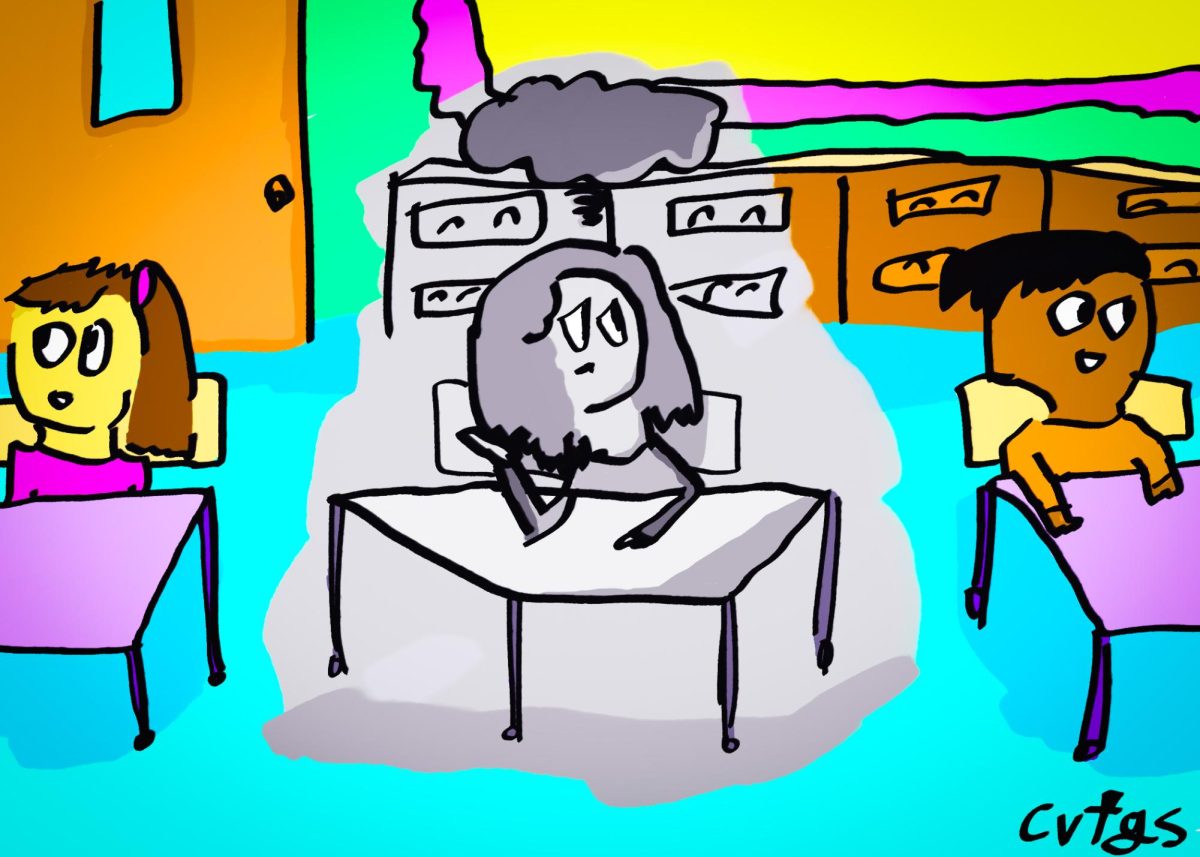
A student sits locked in a Coppell High School bathroom stall during lunch, knees pulled to their chest. The fluorescent light hums above them, indifferent. Their phone vibrates again. Another message from family overseas – short, panicked, unfinished.
They don’t read it immediately. They already know what it means. Their hands tremble anyway.
**********
A negotiation breaks down in a room of polished tables and raised flags. A vote is cast. A border closes. The headlines use words like “tension” and “escalation,” clean language stretched thin across something far more jagged. It is a polite way to sugarcoat global consequences.
**********
A woman makes a stop at an Exxon gas station off Denton Tap Road on her way to the grocery store. The sharp smell of gasoline punctures her nostrils as she steps out of the car, sunrise illuminating her face. INSERT CARD. Beep. SELECT GRADE. Clack. INSERT NOZZLE. Click. BEGIN FUELING.
“2.37…10.74…28.09…”
She watches it rise and wonders how much food she will be able to afford with every rising digit.
**********
Politics permeate far more than we would like to admit.
Wars influence gas prices and grocery costs. Immigration policies determine whether families feel safe in their own homes. International conflicts in war-stricken countries affect the people sitting next to us in class, whose relatives’ lives may hang in the balance of life and death.
All of this is to say that what happens overseas does not stay overseas. So why do we pretend it does?
The idea that international issues are somehow disconnected from Coppell is comforting, but false. They do not stop at borders, and certainly do not stop at Sandy Lake Road.
Protests are powerful.
I realized this most clearly marching through downtown Dallas among thousands of protestors, waving a Palestinian flag. Cars passed by, honking in support as chants echoed through the streets. “VIVA VIVA PALESTINA!” and “From the river to the sea,” are etched into my mind permanently as proof of the fact that the causes we fight for matter. They matter to the people around us.
Protests are personal.
I realized this sitting in the CHS Library classroom last year, watching now-Muslim Student Association co-president Mohammed Saleh deliver a powerful sermon talking about his own loss as a Palestinian, imploring the people sitting with me to use their voices. That while individually, we may not think our voices matter, they do as a collective.
None of the people who marched with me downtown or sat in that room had the power to individually stop a war. They showed up anyway.
Too often, comfort breeds apathy. Coppell’s safety and privilege can create the illusion that global issues are distant spectacles rather than realities connected to our own community. But isolation is a luxury built on ignorance.
And in today’s world, ignorance is one luxury we cannot afford.
Follow @CHSCampusNews on X.