



I open Snapchat and the camera immediately flips to my face. Before I even really look at my own reflection, my thumb instinctively swipes to the right.
One swipe, and my skin is suddenly poreless. Two swipes, and my nose is slimmer, my eyes are wider and my lashes are longer.
It is only then, and only then, that I feel ready to take the photo.
When I first got Snapchat and TikTok, I had a rule for myself, even if I did not realize it at the time: I would not post anything without a filter. Not a video, not a story, not even a casual snap to a close friend.
The “natural” look felt like terrifying exposure, a vulnerability I was not ready to handle. I was haunted by the fear of being seen as anything less than the “perfect” version the algorithm created for me. I wanted people to see me as pretty, but more importantly, I was desperate not to be made fun of.
But as I stare at the screen today, I realize the girl looking back at me is not actually me. She is a digital ghost, a collection of pixels that’s designed to fit a standard which does not exist in real life.
This is the “filtered reality” many girls in our generation navigate every single day. On platforms like TikTok and Instagram, digital alterations have become the baseline, not the exception.
We are constantly, often subconsciously, encouraged to present ourselves for the male gaze. Sculpting our faces and bodies into “perfect” shapes to get likes, validation and a sense of safety from judgement.
What people generally overlook is the missing opportunity for having genuine self-confidence. When we hide behind filters, we lose the chance to be seen and loved for who we are.
High school is already a pressure cooker for fitting in, but the world is so much more vast than a 15 second TikTok or Instagram reel. It is a curse disguised as a “beauty” tool.
I still recall scrolling through my For You page in middle school and wondering why I did not have a jawline as sharp or why my skin did not have an airbrushed glow. I then realized people felt the same way and also did not naturally have those things, but had rather an app with enhancing filters.
By the time students enter Coppell High School today, they are already experts at hiding their insecurities behind a screen, reinforcing the damaging idea that their natural self is something to be ashamed of.
That is unfair.
Why should we feel apologetic for having skin texture, or a nose that does not fit a specific “slim” template? Why has the word “human” become a synonym for “ugly” in the digital world?
The consequences are more than just a few edited pixels, they are a direct hit to our mental health.
When we spend hours scrolling through feeds of people who do not actually look like their photos, we start to view our own real, human faces, as “flawed.”
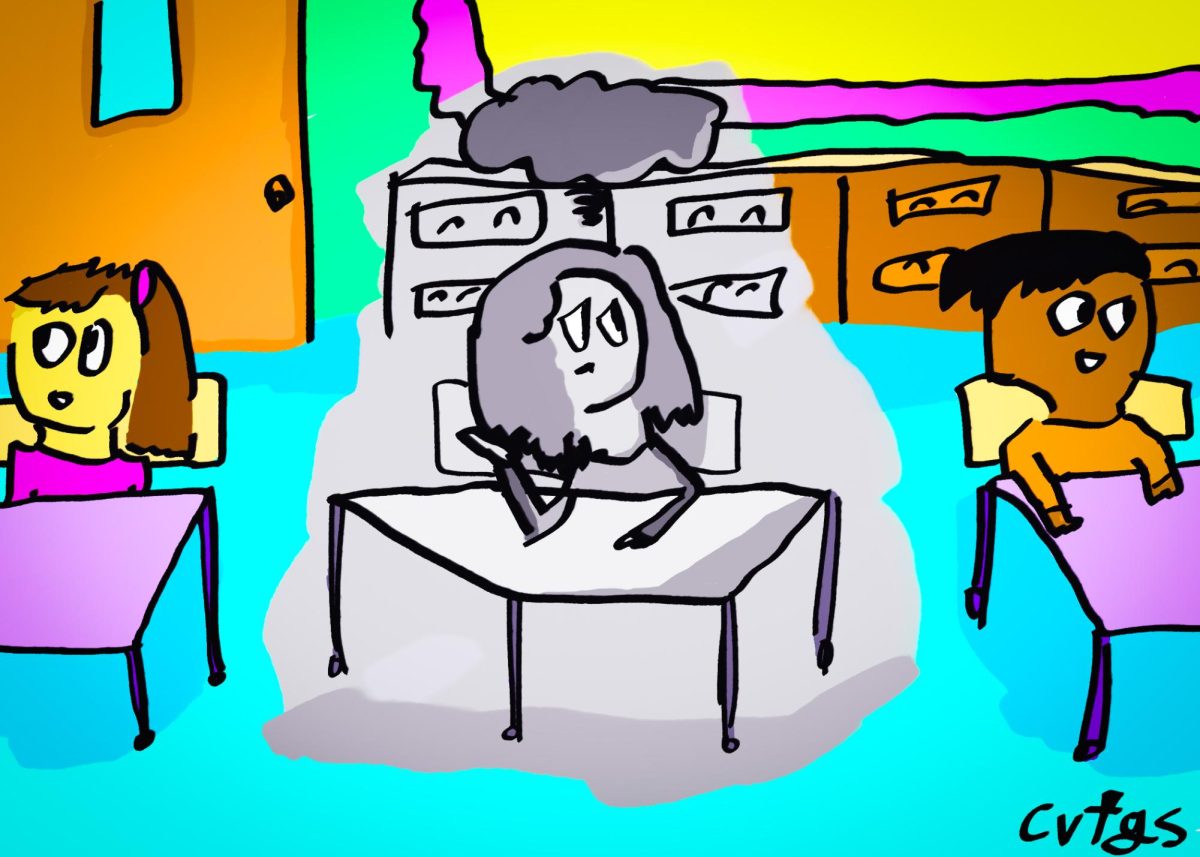
This leads to a cycle of catfishing, not just of others, but of ourselves. We feel we have to maintain a digital lie just to feel worthy of a notification. This constant exposure to “perfection” creates a deep-seated insecurity that follows us off our phones into the classrooms, the cafeteria and the mirrors of our own bathrooms.
To anyone who has ever felt that they were not “pretty enough” to post without an edit: know that your face is not a trend to be tweaked. It is a reflection of your heritage, your laughter and your life.
That is something to be proud of, not something to blur out.
The next time you go for a swipe for that “Paris” or “Dream Girl” filter, stop for a second.
Look at your real reflection, the one with uneven skin, and the real eyes. It might feel uncomfortable, even scary, at first. But that discomfort is where self-acceptance begins. You might find the version of you without the digital mask is the only one that actually deserves to be seen.
Learning to celebrate our “unfiltered” selves now is what will build true resilience later on. After graduating from CHS, the people who matter will not care about which filter you used to hide your freckles or acne; they will care about the person who was brave enough to show up as themselves for people who matter to them.
I now am looking back at that younger version of myself, the one who was terrified of an unfiltered lens, and I want her to know that the “perfection” she was chasing was actually just a barrier. I am finally putting the phone down and learning to love the girl who exists in the real world, textures and all included.
My worth is not a digital edit, and my identity is far more beautiful than any algorithm could ever create.
Follow @hoodaprisha1209 and @CHSCampusNews on X







Zaara Shaik • Feb 3, 2026 at 11:56 am
AMAZING column Prisha!!
Jay Vernekar • Feb 3, 2026 at 9:16 am
Love this story!