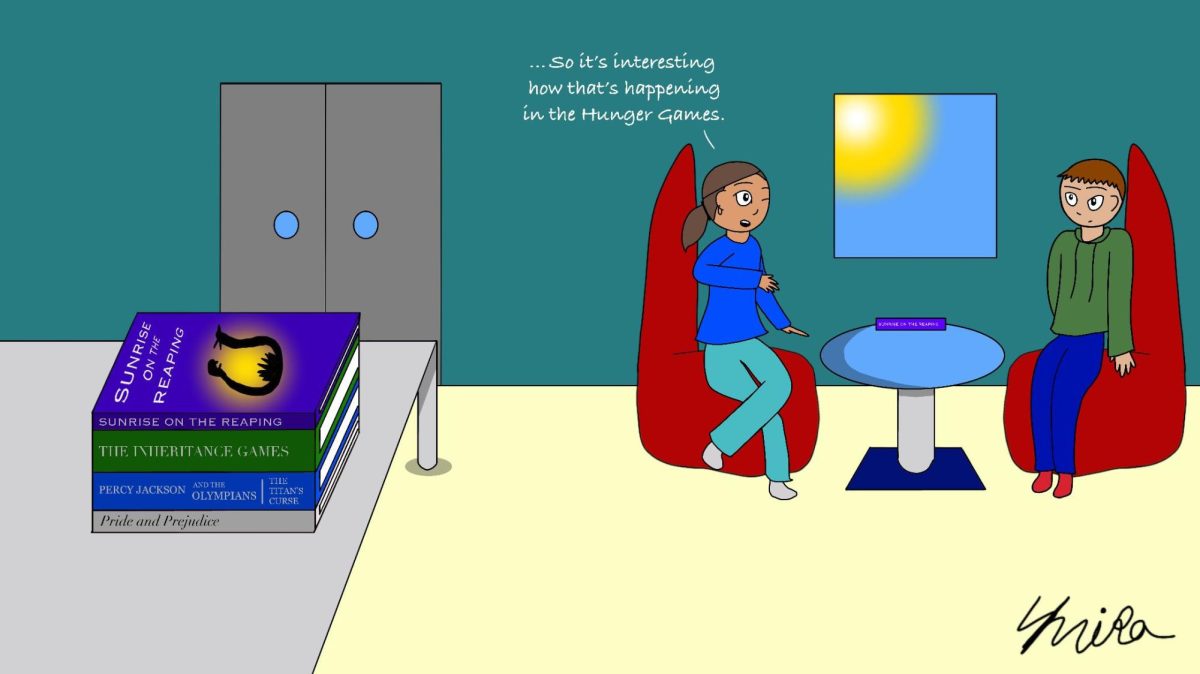
It is a truth universally acknowledged that no teen reads Pride and Prejudice by Jane Austen anymore. Actually, not true, I’m in the process of reading it right now.
But classic novels are slowly becoming more obsolete as literacy rates decrease. People, especially teens, find them harder to understand (reasonable) and give up (unnecessary).
Nowadays, reading is dying as social media trends replace their messages. However, reading is extremely beneficial, and so is critiquing or analyzing the content you read.
Literary criticism and analysis are two different things, focusing on different parts of a story, but maintaining an overall look at the theme. Criticism discusses the historical context of the book, the entire picture and the author’s biases. Analysis magnifies the text, providing insight into ‘why the curtains are blue’ so to speak.
“When we’re analyzing, we’re trying to take what we read and make a universal connection and make a wise discussion out of it,” AP Language & Composition and English II Honors teacher Laura Salamone said.
Literature is a form of media. Movies, TV shows and music reactions are all I see sometimes when I look at Instagram. So why is reading less acknowledged?
Now, I’m sure when the word ‘analyze’ was read, flashbacks to literary analysis essays occurred. However, critique and analysis don’t have to be essays, but in fact discussions. Just like talking about the “Stranger Things” series finale is exciting, so is talking about a new book you read.
“If you read a good book, you want to talk about it,” Salamone said. ”You wish there was someone else who read that book so you can talk about the ins and outs of characters and what message the author was really trying to say.”
You may not like reading books. That’s not uncommon in today’s high school world. However, books come in many different shapes and sizes, whether that be genre, content or form of reading.
Digging deeper into a book is not a crime. It allows for a broader understanding and can even be fun. It doesn’t have to be with classics like Pride and Prejudice or feel like socratic seminars. It can be about We Were Liars by E. Lockhart, discussing the differences between the TV show and the book. Annotating Six of Crows by Leigh Bardugo, while obsessing over Kaz and Inej’s relationship.
In today’s world, literacy is not a priority despite the many benefits of reading to independent thought. Analyzing the content of a story or the broader message allows for a connection in what you read, providing understanding and increasing the benefits of reading even more.
So it may not be a truth universally acknowledged that no teen reads Pride and Prejudice anymore. But hopefully, a truth that is universally acknowledged is that reading and discussing novels you enjoy can be gratifying.
Follow @CHSCampusNews on X.