I was scrolling on instagram seeing nothing but influencers, new trends, and get ready with me’s. One day my FYP showed me a video starting off showing a polar bear weak on melting ice in Antarctica “All because you used AI” the shift of informational news started to hit me. I started seeing videos of penguins fleeing from their homes and snow foxes struggling to find food.
These videos made me want to talk about it to others. I gained interest in researching what else AI is contributing to disrupting our earth. Spreading awareness on a fastly moving technology resource can contribute to making a change in our society and be more aware of what our world is going through before it affects more ecosystems.
Using large amounts of data, AI provides new solutions and insights that push progress. However, there is a downside to this change: the significant environmental costs tied to its growing use.
In recent years, technology has advanced quickly, but it is also harming our planet. We use AI for different tasks and the energy needed to run these systems contributes greatly to pollution, greenhouse gas emissions, and climate change.
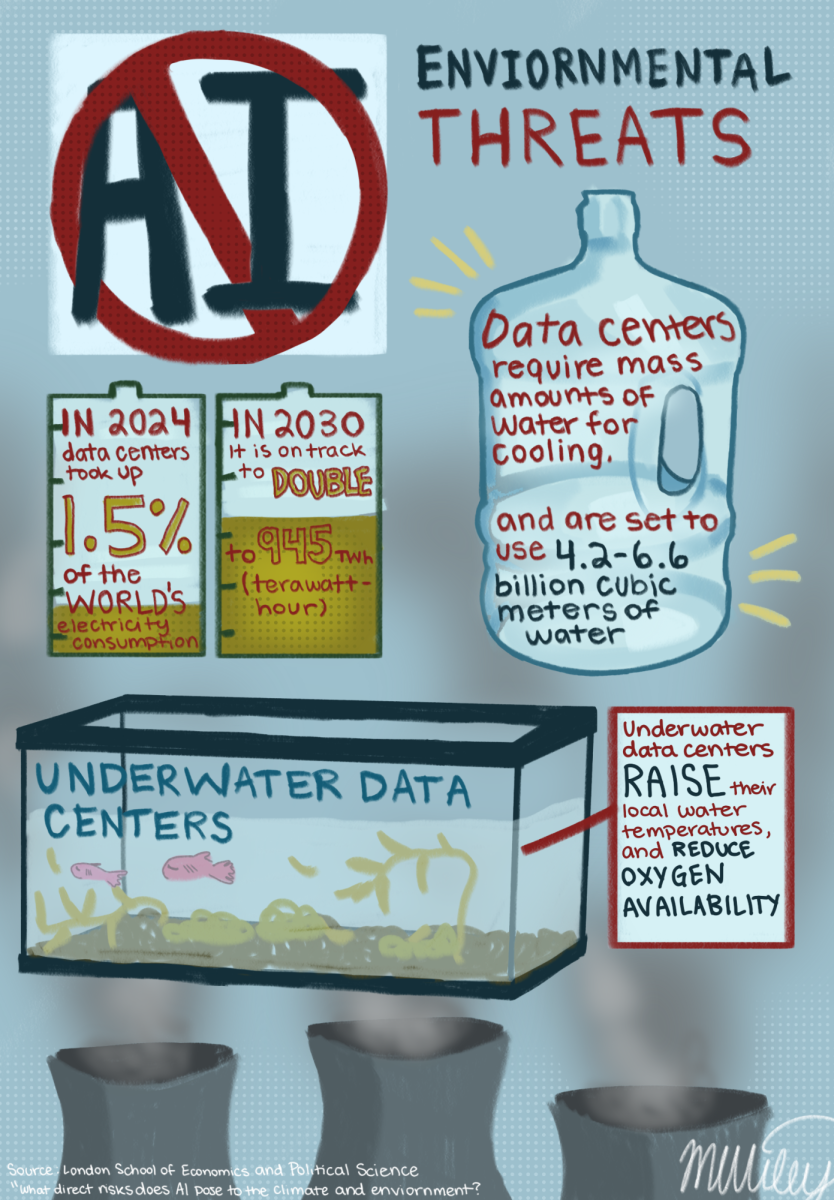
The data models that power AI come from massive data centers, which need large amounts of electricity and produce a lot of heat. This demand for energy affects the environment and disrupts our ecosystems.
AI depends on data analysis to give accurate results. For example, a simple question directed to AI is the same amount of energy needed to fully charge an iPhone.
”It looks like these data centers are exponentially growing,” IB History of American II teacher Micheal Brock said.
Many tend to see AI as just a computer technology feature. This view oversimplifies how AI works. This technology requires large storage capacities that use energy and resources, such as minerals and metals, needed for key manufacturing.
AI industry sources like Google Gemini and Chat GPT use about 97.5 million liters in total per day of water for cooling. Data centers generate heat and need cooling systems to keep operating at the right temperatures. This water reliance disrupts local supplies, putting additional stress on ecosystems already struggling.
“If you look at local climates in these data centers you see more than a billion gallons of water,” senior Harshvardhan Kumar said. “It raises the question on how secure these water sources are.”
The growing demand for AI technologies threatens our planet. Increased energy use connects directly to higher greenhouse gas emissions, worsening climate change.
“The environmental part of it is really significant,” Brock said. “The amount of energy use that is being involved with keeping the data centers going”
Investing in renewable energy for data centers reduces reliance on fossil fuels. Promoting energy-efficient AI technology cuts overall consumption and manages water resources.
“These data centers require around 17.6 billion liters in the last year of water,” Harshvardhan said. “These centers are very energy intensive.”
As we move into a more AI-driven future, we must remain aware of the environmental consequences tied to this technology. By focusing on sustainability and pushing for new solutions, we can enjoy the benefits of AI while protecting our planet’s health.
Follow The Sidekick (@CHSCampusNews) on X.