* Editor’s Note: This story has been updated from its original version
In an era where artificial intelligence has reshaped society, the authenticity of writing has frequently come into question. A copywriter ran the Declaration of Independence through a detector that produced a result of 98.51 percent AI-generated despite it being written 249 years ago. Is this mistake a one-time occurrence or an accurate reflection of AI detection?
Educators are struggling to police the use of AI tools among students. However, turning to algorithms to distinguish between human work and machine output may be creating more problems than it solves.
Starting in the 2025-26 school year, Coppell High School has switched to using the AI detection platform CopyLeaks. This follows the previously used TurnItIn platform, which was replaced upon finding that it produced false positives. Although schools nationwide are adopting similar software, questions remain about whether these tools can accurately identify AI-generated work without misjudging honest work.
Ironically, AI detectors are generative AI tools themselves, feeding content through large language models to make the distinction between human or machine-generated work. Many companies advertise high accuracy rates with CopyLeaks itself claiming a reported accuracy of 99.12% with low false positive rates.
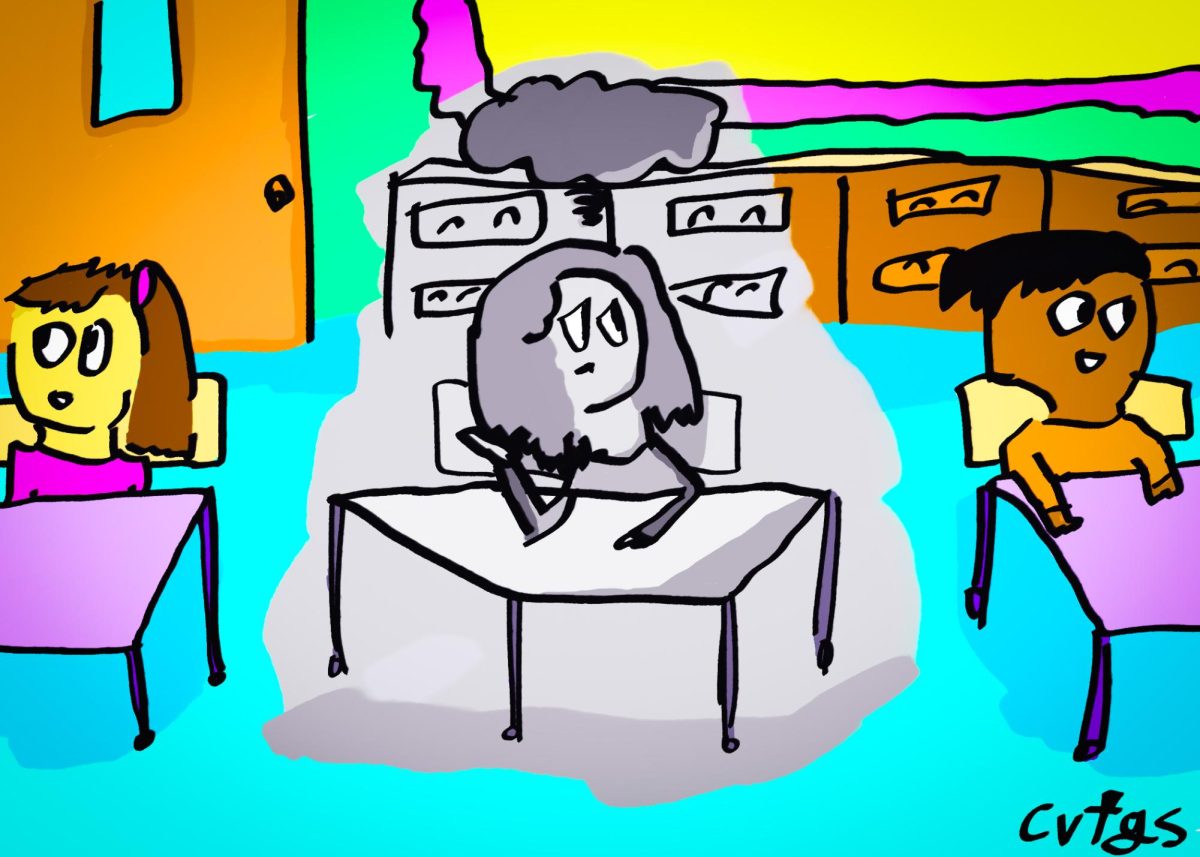
However, I experienced a false positive myself with CopyLeaks after turning in an essay flagged at 61 percent AI-generated. That experience made one thing clear: a single inaccurate result can have a cascade of consequences.
The consequences of cheating at CHS are severe. On the first offense, a student receives a zero on the assignment with no opportunity to reassess, and is removed from honor societies. A second offense adds in-school suspension to the above. Academic penalties and loss of scholarships or future opportunities are also discipline possibilities. A faulty accusation and the penalties that follow cause unnecessary stress and anxiety within students.
False negatives are also a concern. Students who use generative AI may not be flagged at all. AI detection platforms risk both punishing innocent students and missing dishonest ones.
The issue of cheating at CHS is growing, and there does need to be consequences for academic dishonesty. However, it should not come in the form of treating every student guilty by default.
AI detectors may serve as a useful baseline, but it is unwise to rely solely on them or let their results sway independent investigations. Treating every student as guilty before proven innocent because of a machine result damages the faculty-student relationship and creates an environment of distrust.
Instead of resorting to AI detectors, schools should adopt human-centered approaches. Assembling unbiased review committees to evaluate a student’s work gives them a chance to explain their process. Teachers who are familiar with their students’ writing styles and work ethic can also provide their input.
The goal is not to ignore AI misuse; it is to catch it accurately and fairly. Schools should be able to uphold academic integrity without compromising students’ consistent hard work.
Follow Aashi (@aashi_panchal6) and @CHSCampusNews on X.