Skip to Content
Categories:

Weight behind the win


Hidden realities behind Black excellence
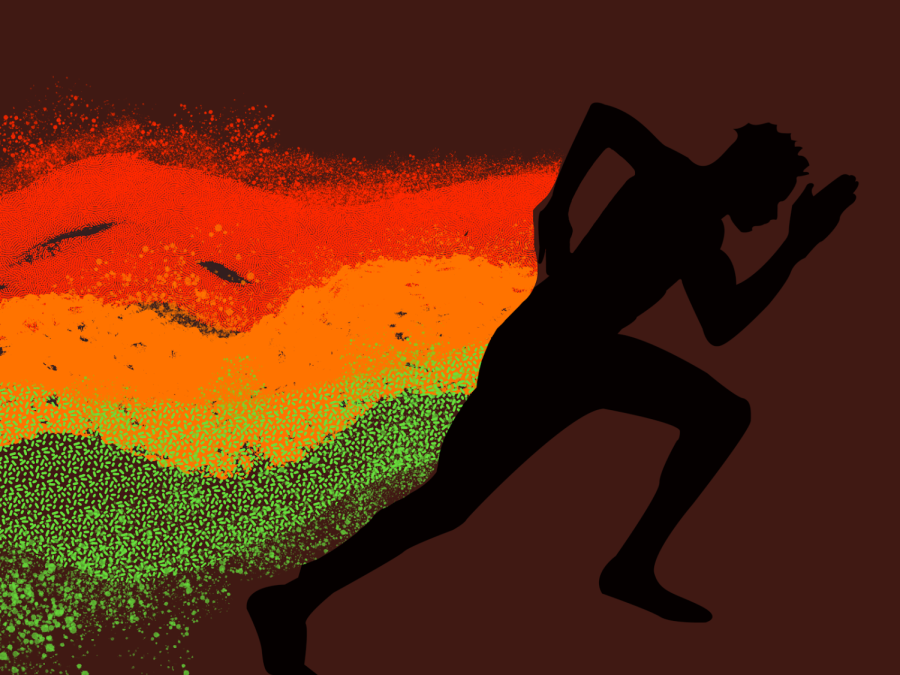
Various photos showcase Coppell High School's current African American athletic figures. For Black History Month, The Sidekick’s Reece Murry examines how Coppell athletes and coaches handle the stereotypes associated with Black excellence. Photo illustration by Prathi Tamara Sathish Kumar.
Various photos showcase Coppell High School’s current African American athletic figures. For Black History Month, The Sidekick’s Reece Murry examines how Coppell athletes and coaches handle the stereotypes associated with Black excellence. Photo illustration by Prathi Tamara Sathish Kumar.
Prathi Tamara Sathish Kumar
Coppell track and field coach Eric Hill sends a message to the Coppell community. For Black History Month, The Sidekick’s Reece Murry examines how Coppell athletes and coaches handle the stereotypes associated with Black excellence.

African American athletes have an invisible weight on their shoulders, carrying the difficulty of the expectations of a Black athlete.

Coppell track and field coach Eric Hill upholds expectations across all races.

“I don’t differentiate between expectations. I’m not going to say to the African American student, ‘I expect this’ and then to the Caucasian student, ‘I expect this.’ I expect the same from both,” Hill said.

As sports have progressed, Black athletes are praised for typical dynamics of being athletic: speed, strength and talent. From the larger picture, part of their experiences are often ignored.

“As we passed through time, people came to understand that they are athletic, they can run and throw, but they also have a brain,” Hill said. “That is the one thing that may get left off the application of a Black athlete: they have the ability to think and they’re just as smart as their counterparts. I think that’s the one thing that gets ignored out of anything else.”
Coppell track and field coach Eric Hill sends a message to the Coppell community. For Black History Month, The Sidekick’s Reece Murry examines how Coppell athletes and coaches handle the stereotypes associated with Black excellence. (Reece Murry)

In Coppell, Hill has seen Black athletes facing unique circumstances.

“Specifically in Coppell, many Caucasian kids were born on second or third base, we may not have a lot of African American kids that were born in that same circumstance; they may have been born on first base, now they have to navigate more just to get what some of our white athletes were born with,” Hill said. “That becomes a big weight on them. It’s a big pressure when they not only have to perform in the sports arena, but compete in the academic arena as well. That can weigh on a lot of African American students.

From an outside perspective, it can be seen that Black coaches are harder on Black athletes, but that perspective could be skewed without understanding the reasoning.

“I can tell you from firsthand experience, there’s a lot of truth to that, especially in inner cities like Dallas and Fort Worth,” Hill said. “Kids often become a product of their environment. If they grow up around drugs, violence and gang activity, that’s where they tend to navigate. As educated Black men in the coaching profession, it’s our job to keep them from that. That’s why we’re harder on our Black athletes than our white athletes, not because expectations are different, but because we know their backgrounds and what’s at stake.”

Even with the constant reminders of how to behave, a healthy medium must be included in order to keep athletes disciplined.

The way you balance it is you love them just as much as you ride them,” Hill said. “When you’re getting on them and you’re in their faces trying to get them to understand how to conduct themselves, you hug them and tell them you love them and respect them. You can’t just be in a kid’s face all the time and never tell them they mean something to you. That is where the balance has to occur.”

During Black History Month, Hill wants to inform the Coppell community that Black student-athletes hold more than just an athletic presence.

Hill emphasizes the importance of understanding, not lowering expectations. 

“Don’t treat them according to that, but give them a space where they can still achieve whatever they want. I’m not asking you to treat them differently; I’m asking you to make sure you create a space so all that difficulty they have in their life doesn’t stop them,” Hill said. “Let’s not enable them by making it easy or going easy on them because their circumstances may be different. Let’s just allow them to be who they are in that space.”

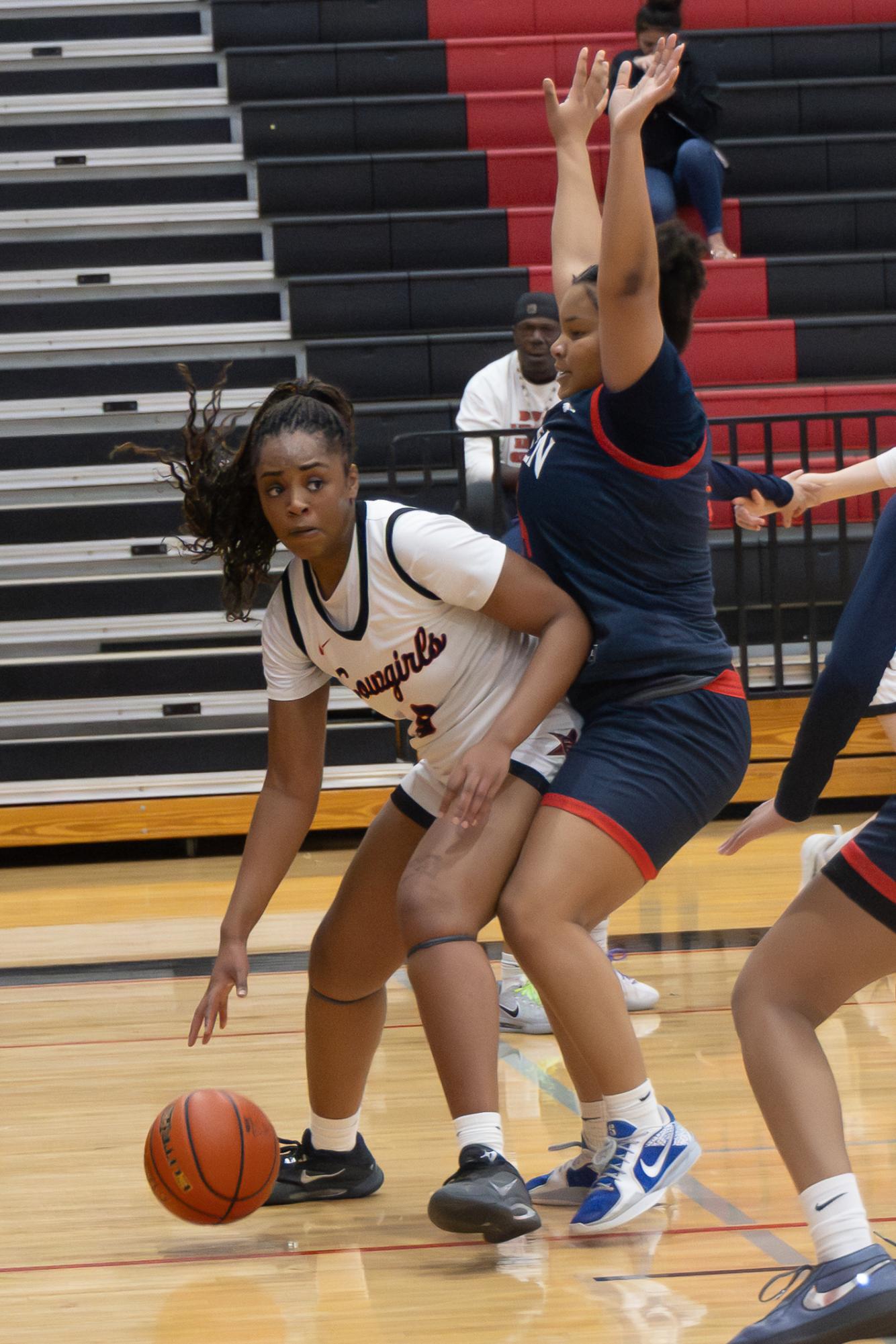
Coppell junior guard Lauren VanPelt has felt limited to her athletic ability. For Black History Month, The Sidekick’s Reece Murry examines how Coppell athletes and coaches handle the stereotypes associated with Black excellence.
Girls basketball

Coppell junior guard Lauren VanPelt thinks Black athletes will be held at a higher standard because a lot of people who succeed in athletics are the Black population. 

“As a Black athlete, many assume that all I do is rely on natural talents rather than hard work, discipline and intelligence,” VanPelt said. “At times, it is frustrating because all of the efforts I put in are ignored instead of being recognized by the hard work that goes into the highlights they see. Sometimes I do feel reduced to just being a basketball player rather than a high school student who also has other ambitions outside of my sport.”
Coppell junior guard Lauren VanPelt has felt limited to her athletic ability. For Black History Month, The Sidekick’s Reece Murry examines how Coppell athletes and coaches handle the stereotypes associated with Black excellence. (Sohalia Reddy)
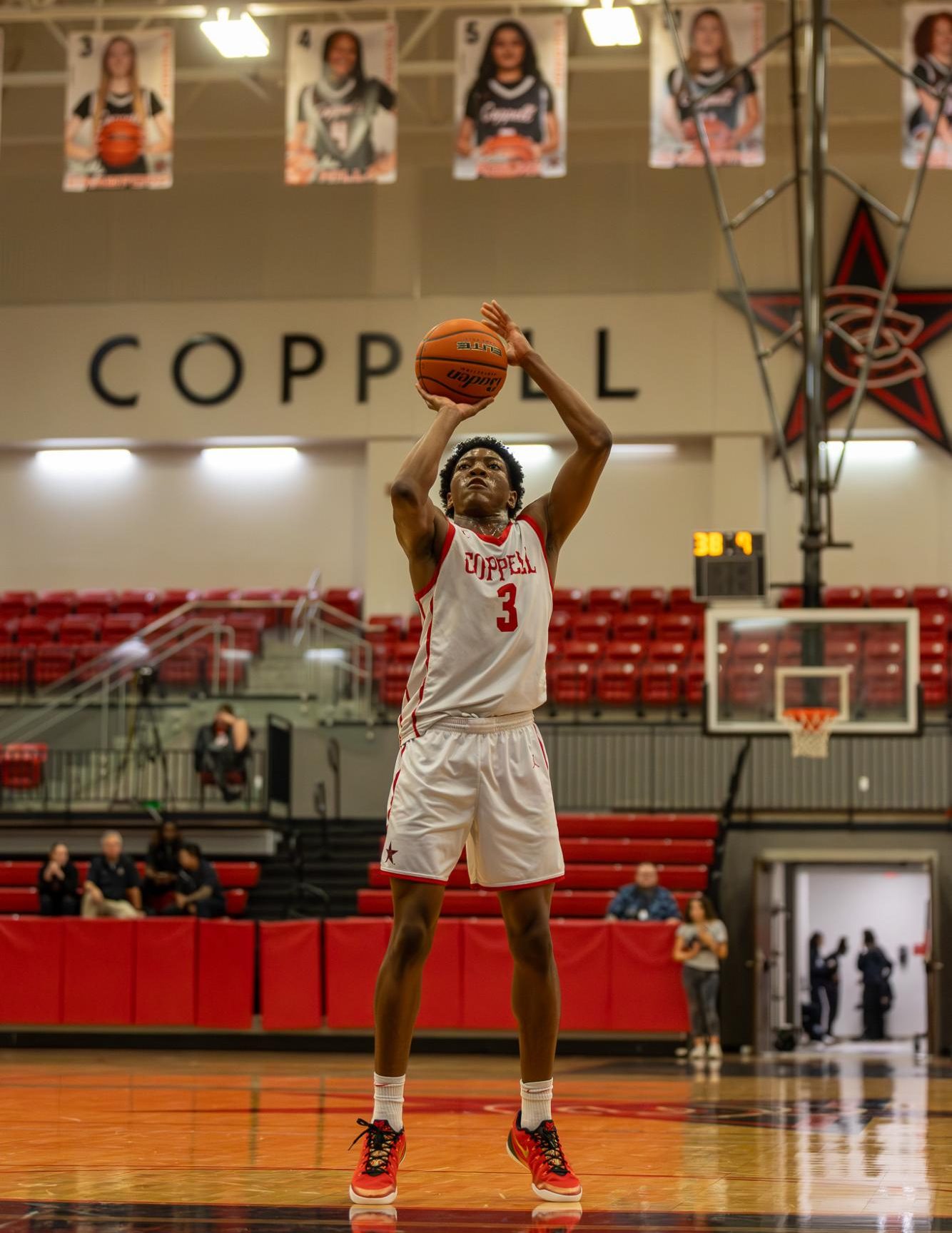
Coppell senior guard Sibu Socks gains knowledge of the inevitable. For Black History Month, The Sidekick’s Reece Murry examines how Coppell athletes and coaches handle the stereotypes associated with Black excellence.
Boys basketball

Coppell senior Sibu Socks has faced a number of challenges as a Black athlete and has brought a voice to the stereotypes.

“From my experience, keep your composure and learn how to handle adversity,” Socks said. “There’s going to be ups and downs in everything, but how you reacted with the future holds.”
Coppell senior guard Sibu Socks gains knowledge of the inevitable. For Black History Month, The Sidekick’s Reece Murry examines how Coppell athletes and coaches handle the stereotypes associated with Black excellence. (Naila Ali)
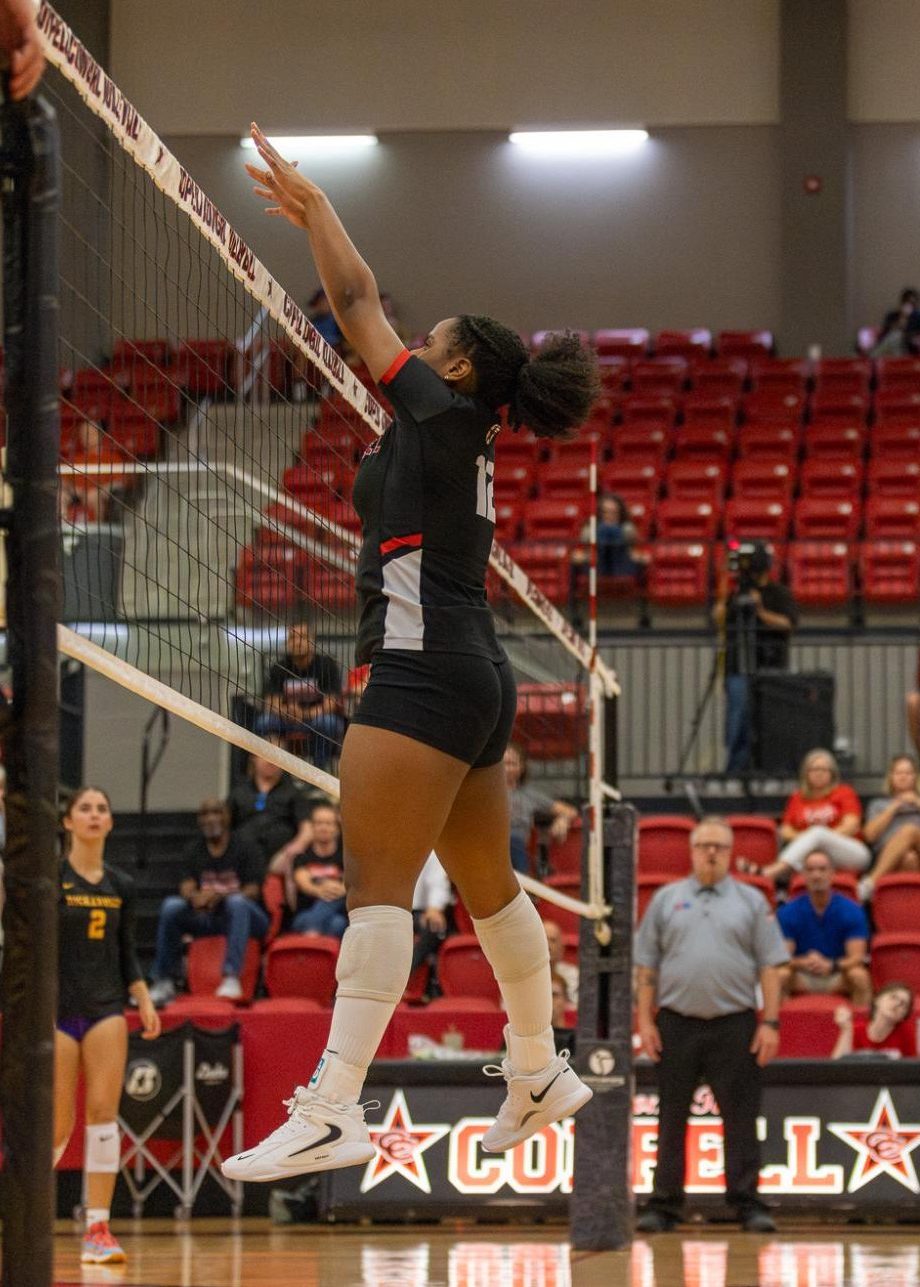
Coppell junior middle blocker Taliah Ellis has undergone the pressure of highly successful in her family. For Black History Month, The Sidekick’s Reece Murry examines how Coppell athletes and coaches handle the stereotypes associated with Black excellence.
Volleyball

Coppell junior Taliah Ellis finds the behind the scenes of being a Black athlete is an opaque reality, especially with her father, Greg Ellis, playing in the NFL.

“I feel like people see the performance on the court, but they don’t see the emotional weight of knowing that one bad game can change how I view myself and how others view me,” Ellis said. “Sometimes if I make a mistake, it can feel like they’re more scrutinized or tied to assumptions about my attitude or work ethic. There is less room for grace and I need to be perfect just to be seen as a good athlete.”
Coppell junior middle blocker Taliah Ellis has undergone the pressure of highly successful in her family. For Black History Month, The Sidekick’s Reece Murry examines how Coppell athletes and coaches handle the stereotypes associated with Black excellence. (Naila Ali)
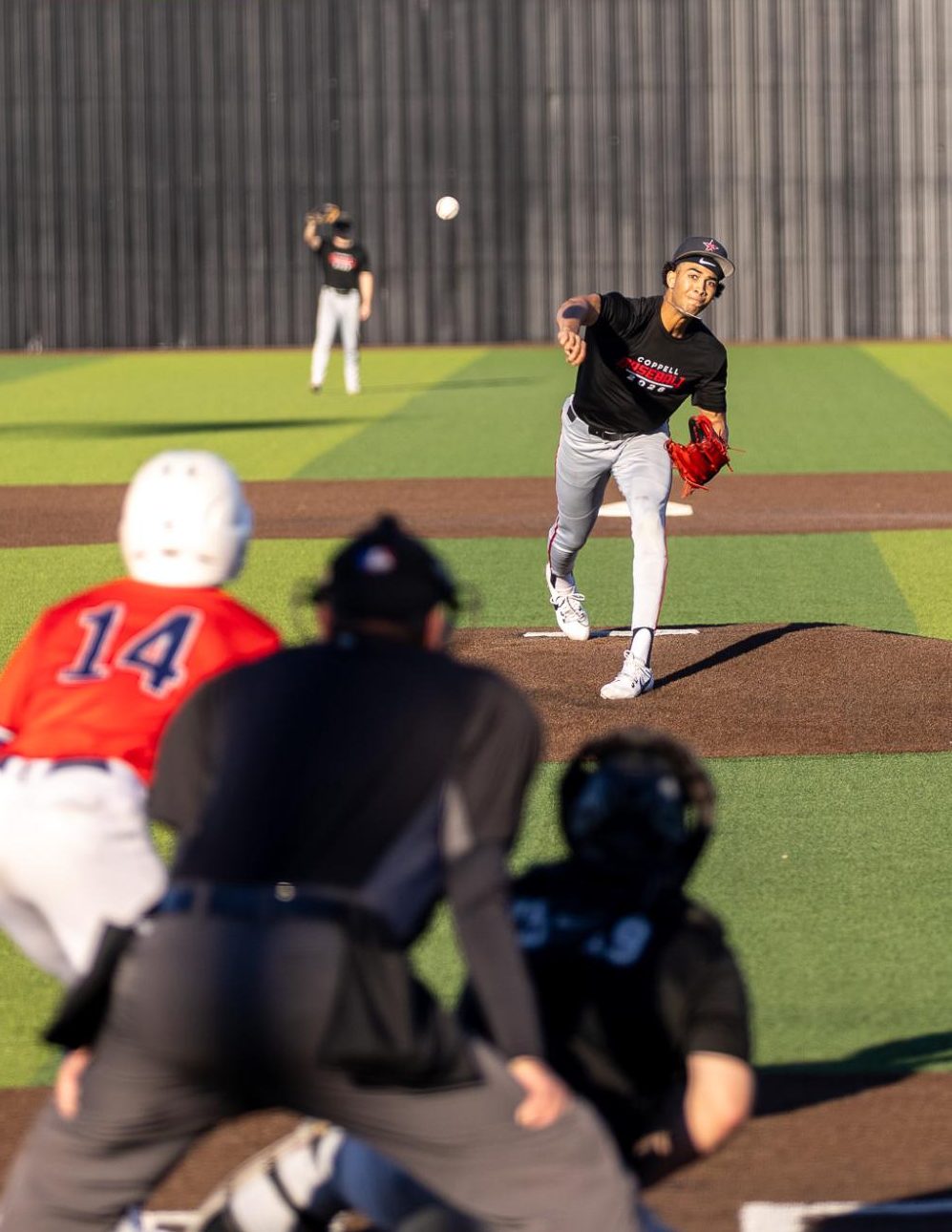
Coppell senior pitcher Zander Montgomery has overcome the struggle of being a minority and committed to Oregon University. For Black History Month, The Sidekick’s Reece Murry examines how Coppell athletes and coaches handle the stereotypes associated with Black excellence.
Baseball

Coppell senior Zander Montgomery finds that a sport that is not primarily Black has its challenges and lives the reality of being a minority in athletics.

“Baseball is majority white, Black people are not typically considered to be ‘playing baseball’ and the percentage of Black athletes playing baseball is around 6%,” Montgomery said. “I feel like we are expected to do more and be above average, and it’s impacted me because I feel like I have had to put in a lot more work and time to just get playing time on the field at all.”
Coppell senior pitcher Zander Montgomery has overcome the struggle of being a minority and committed to Oregon University. For Black History Month, The Sidekick’s Reece Murry examines how Coppell athletes and coaches handle the stereotypes associated with Black excellence. (Naila Ali)
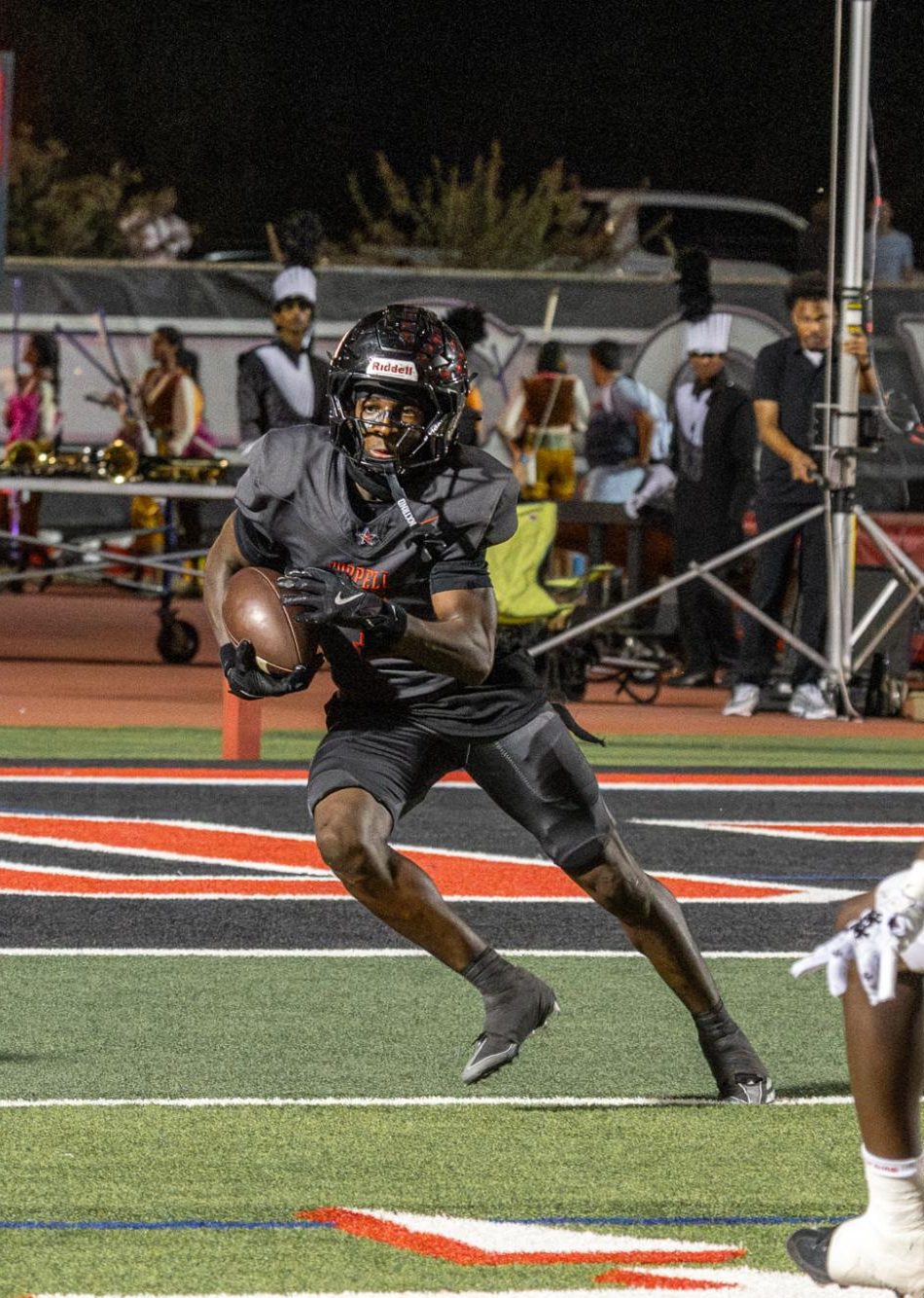
Coppell junior cornerback Jaden Bibbs uses limitation to motivate himself. For Black History Month, The Sidekick’s Reece Murry examines how Coppell athletes and coaches handle the stereotypes associated with Black excellence.
Football

Coppell junior Jaden Bibbs has faced pressure tied to perception and expectation, but has never let that counteract his ability.

“Being a Black athlete, it does put more pressure on you. When we played Hebron and I got scored on they said ‘you have all these D1 offers but y’all aren’t even good,” Bibbs said. “I do take it personally, but I want them to remember me for being the coldest person they’ll ever play.”
Coppell junior cornerback Jaden Bibbs uses limitation to motivate himself. For Black History Month, The Sidekick’s Reece Murry examines how Coppell athletes and coaches handle the stereotypes associated with Black excellence. (Naila Ali)
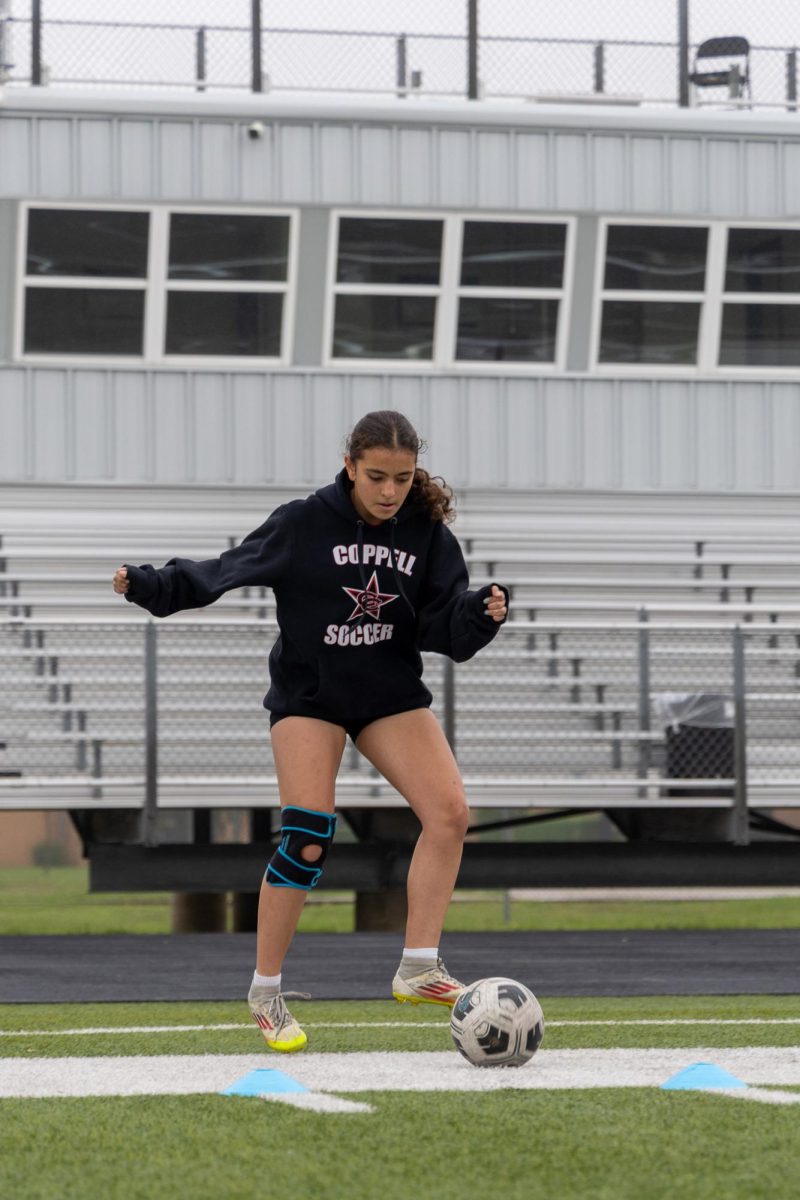
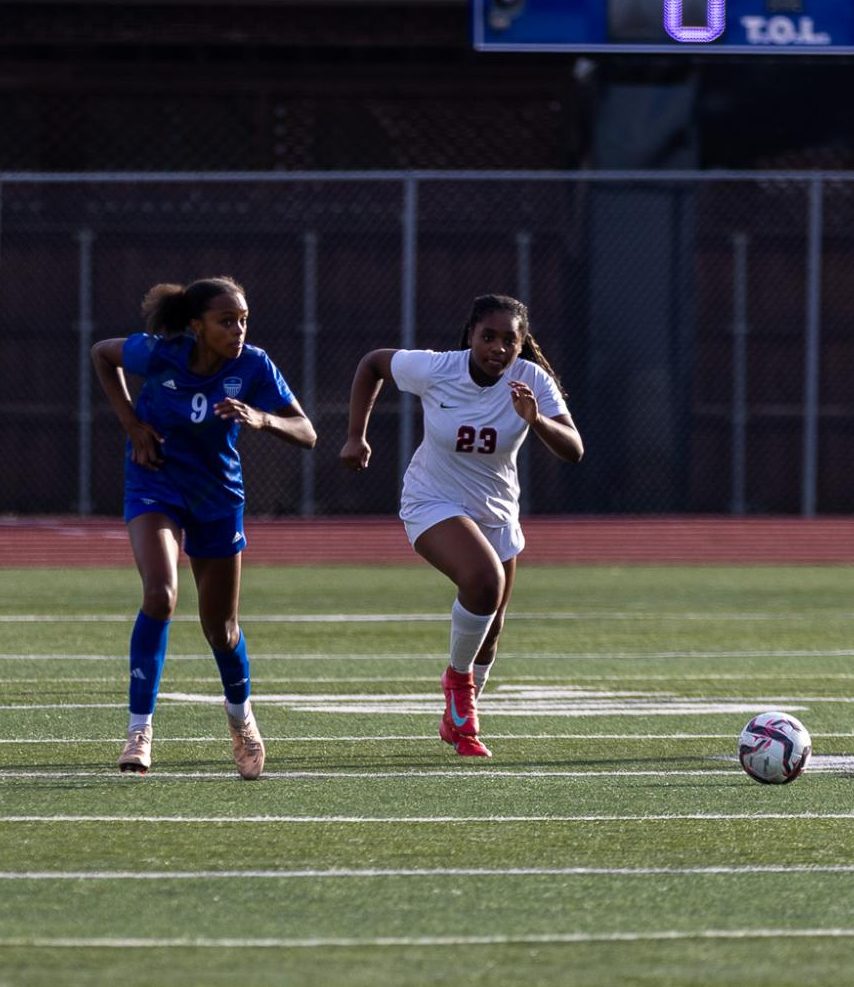
Coppell freshman Abigail Johnson is a Black soccer player who balances the stress of expectations.  For Black History Month, The Sidekick’s Reece Murry examines how Coppell athletes and coaches handle the stereotypes associated with Black excellence.
Girls Soccer

Coppell freshman Abigail Thompson is surrounded by people who have high expectations, and that has influenced her as she has grown throughout the years.

“In life, I was always taught to try my best no matter what,” Thompson said. “Even if it feels like nothing would work or it’s impossible, there’s always something to make it happen, you just have to work for it.” 
Coppell freshman Abigail Johnson is a Black soccer player who balances the stress of expectations. For Black History Month, The Sidekick’s Reece Murry examines how Coppell athletes and coaches handle the stereotypes associated with Black excellence. (Naila Ali)
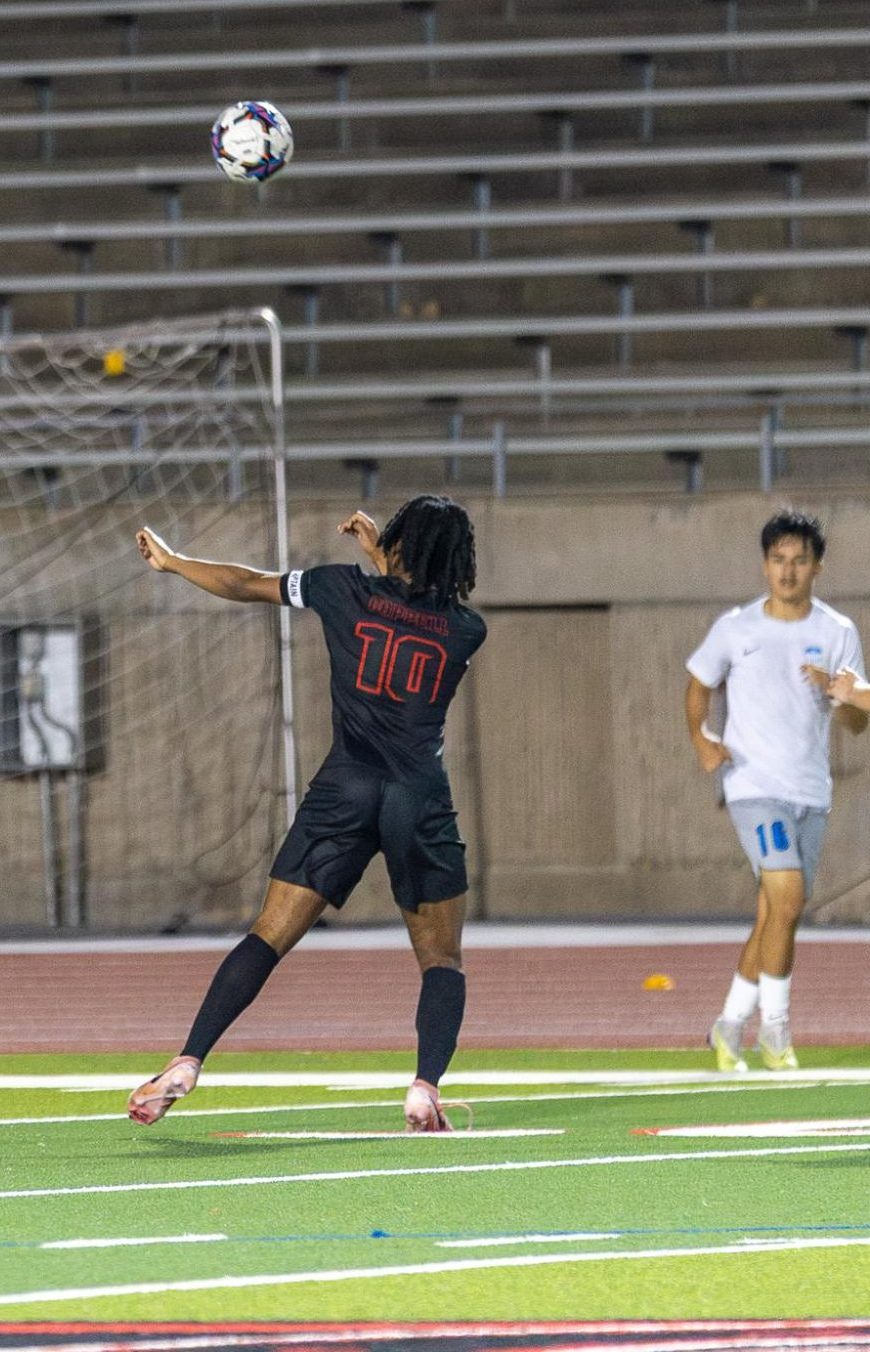
Coppell senior midfielder Justice Ihezie finds that character earns respect. For Black History Month, The Sidekick’s Reece Murry examines how Coppell athletes and coaches handle the stereotypes associated with Black excellence.
Boys soccer

Coppell senior Justice Ihezie has had to learn to self regulate his reactions and anger due to microaggressions on the field. 

“I feel like there’s a way you’ve got to carry yourself, and you need to show good character on and off the field,” Ihezie said. “In soccer especially, you need to show that you belong in your position.” 

Follow @reecemurry and @SidekickSports on X

Coppell senior midfielder Justice Ihezie finds that character earns respect. For Black History Month, The Sidekick’s Reece Murry examines how Coppell athletes and coaches handle the stereotypes associated with Black excellence. (Naila Ali)
More to Discover