



Standing in my bathroom, comb in hand, I gently brush through my thin, brittle hair. A clump of hair sticks to the comb and my face falls in disappointment. I bunch it up and throw it in the trash, opting for a hairstyle to cover thinning patches along my head.
Since eighth grade, I face this reality almost daily. This is unfortunately also the reality for many teenagers across the nation. Premature hair loss affects up to 38.5% of adolescents in the United States, and it is not just a cosmetic issue; it can affect confidence and self-image.
Hair loss at a young age is often seen as a negative, particularly for girls. My frustration with hair loss is only furthered by the stereotype that brown girls have thick and healthy hair. If I was not already self-conscious enough, this makes it worse.
For many teenagers, hair is tied to identity and self-expression. It is a crucial part of confidence and appearance, so losing it lowers self-esteem. Every day activities, like doing a hairstyle or taking photos, become stressful or embarrassing.
While dealing with hair loss can be overwhelming, steps can be taken to support hair health and encourage regrowth.
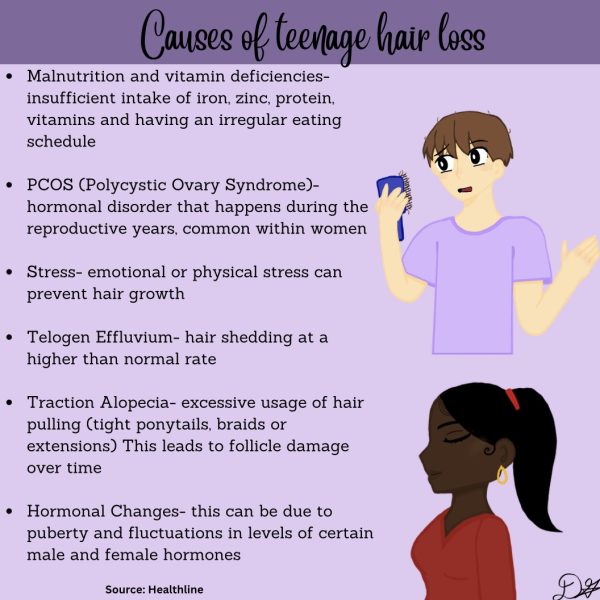
A balanced diet is crucial. Consuming foods rich in protein and fiber, as well as healthy amounts of iron, zinc and vitamins A, C, D and E, strengthen hair strands.
Hair care routines matter as much as nutrition. Use gentle brushes and avoid heat and harsh chemicals to prevent unnecessary breakage. For hair styling, opt for organic hair products and heatless curlers. Avoid high tension hair styles, such as tight ponytails, because those can cause traction alopecia.
“Do not make your hair style too tight,” Epiphany Dermatology Dr. Nancy Chung said. “If you pull on your hair for long periods of time, it actually starts to damage the hair follicles enough to stop growing hair.”
For regrowth, hair oiling is an ancient, holistic practice rooted in Indian tradition recently gaining traction across the United States. Massaging the scalp with hair oil may improve blood flow, which stimulates hair follicles.
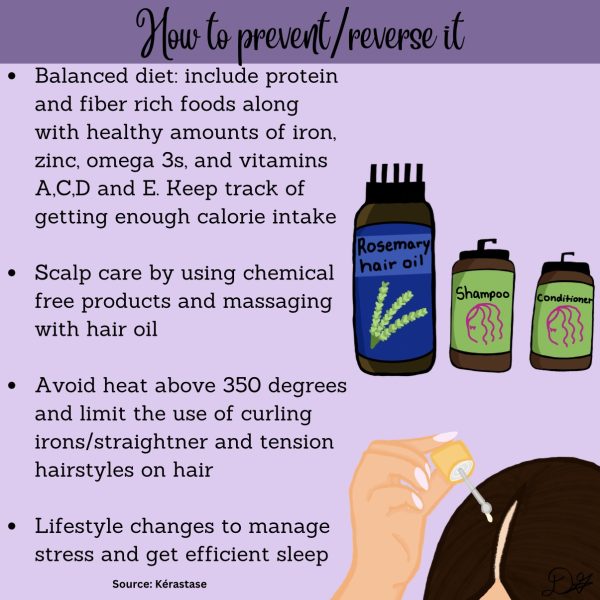
A 2015 study shows rosemary oil acts as a natural effective alternative to Minoxidil 2%, the standard topical medical treatment for hair loss. If using topical treatments or taking medications is not an option, natural treatment options like hair oiling can be helpful.
Stress is another major factor in teenage hair loss. A heavy amount of stress from social or academic pressures can induce the most common cause of teenage hair loss: telogen effluvium.
“Hair has a cycle where it goes from a growing stage, to transition stage and then a fall out stage, which is the telogen phase,” Dr. Chung said. “Telogen effluvium happens when your hair is putting more hairs into the telogen phase and they are falling out.”
Lifestyle changes, especially proper sleep, reduces the physiological effects of stress on the body, including hair loss.
“Sleep helps you renew your body and mind,” Dr. Chung said. “Not getting enough of it worsens stress levels and can worsen hair loss.”
Additionally, if hair loss persists, consulting a dermatologist or healthcare professional is important. They can identify underlying conditions and recommend appropriate treatments, such as topical solutions or medications when necessary.
“We naturally lose about 100 to 150 hair strands per day,” Dr. Chung said. “If you are having patchy hair loss or other symptoms besides hair loss, you should see a healthcare professional.”
Preventing hair loss and supporting regrowth is not just about making physical changes; it is about making mental ones. Teenagers’ self-worth is not tied to their appearance, so do not let hair loss define your identity or confidence. Social media dominates the world of many teens, and comparing yourself to others only hurts your self-esteem and intensifies stress.
Hair loss as a teenager can be challenging, but learning how to care for your hair and body in a way best suited to your personal needs makes a meaningful difference. If you are experiencing hair loss as a teenager, don’t let it stop you from trying that new hairstyle or taking a great photo.
I am more than the hair I lose. And so are you.
Follow Aashi (@_aashipanchal_) and @CHSCampusNews on X.




Tareni Moorty • Mar 12, 2026 at 3:34 pm
wow aashi!! I love this story, amazing job!