


Turbulent waters


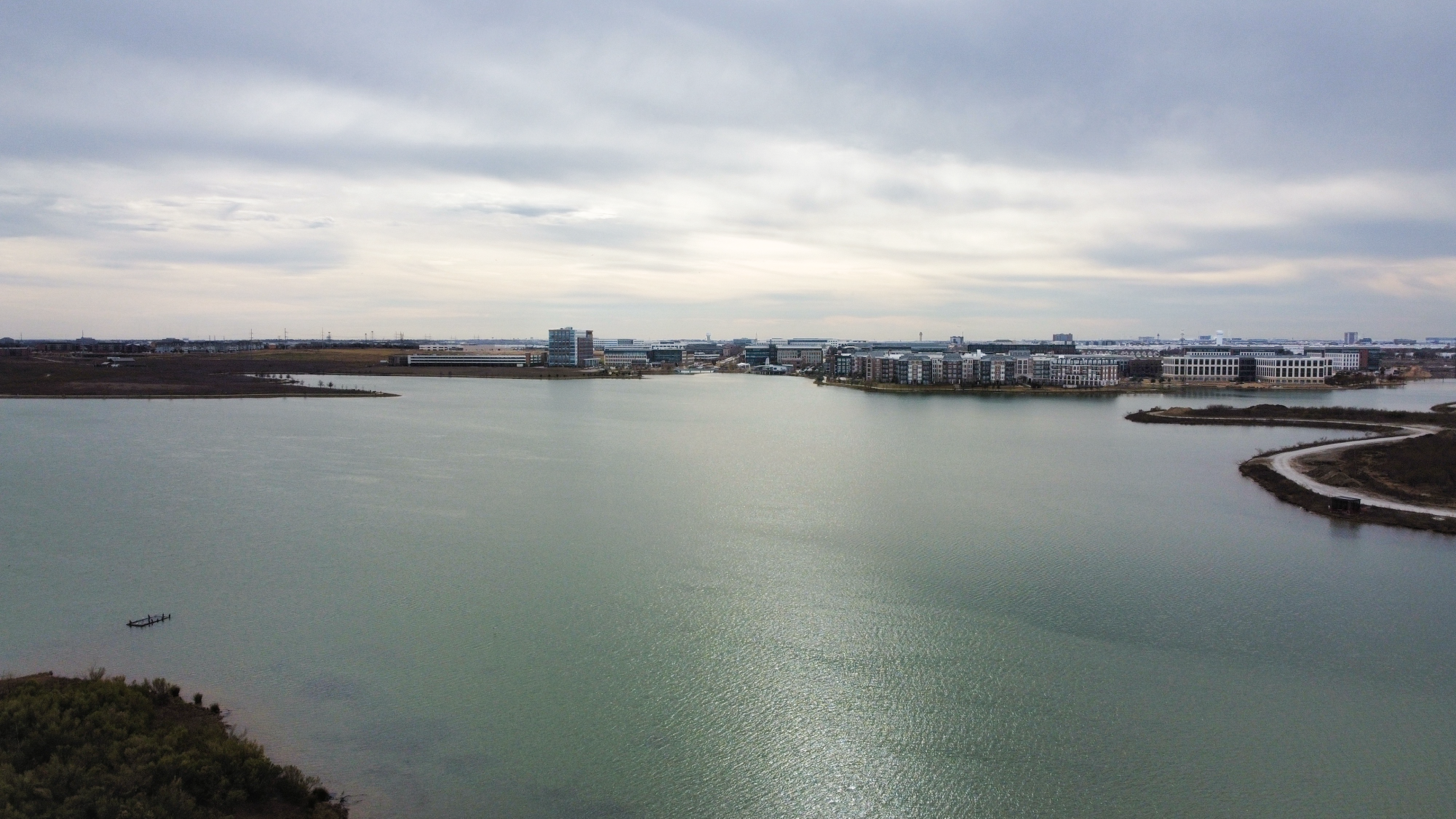
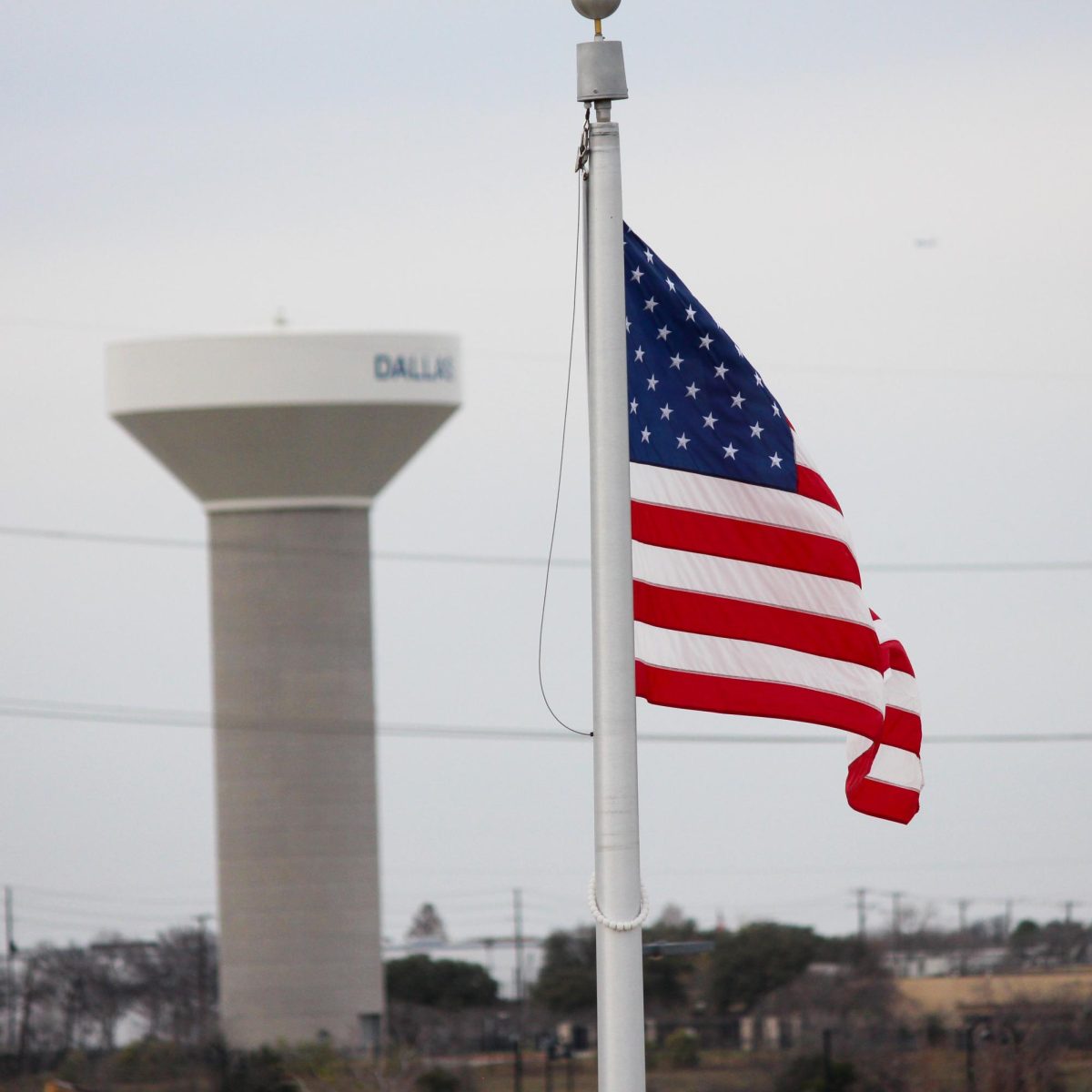

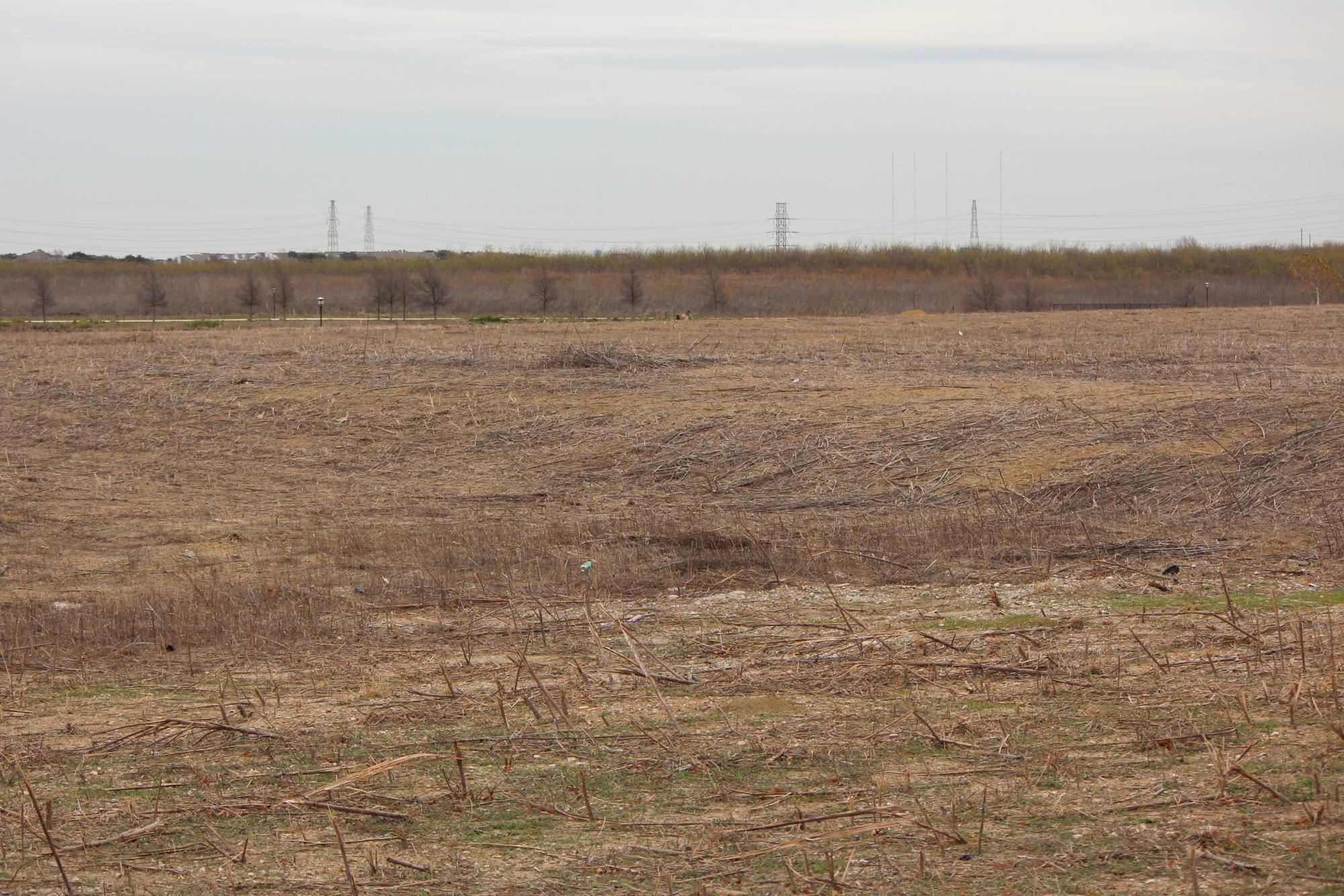
Looking across the lake from The Sound, visitors can see a looming water tower and thick trees next to the dam.
North Lake and its surrounding land are a part of the City of Dallas, despite being an almost 30-minute drive from City Hall. The region was annexed by Dallas on Oct. 17, 1955 via strip-annexation. This method of acquiring territory is now illegal with the passage of Texas Senate Bill 89 in 1999.
With Coppell to its west and Irving to its east, North Lake is an isolated outpost of Dallas in the fringes of the county. Prior to the new development, Dallas did not need to provide services and utilities to the mostly uninhabited corner of the city.
“Mrs. Billingsley, the real estate developer out here, wanted Dallas to do the EMS and fire service,” Dallas Fire-Rescue engine driver Craig Lewis said. “It’s our job to patrol the 1,000 acres and take care of this area.”
More on Billingsley in just a bit.
The 16,500 square feet Dallas Fire Station No. 58 was built to serve the area, completed in July 2022. It comes with a dedicated engine, booster and other rescue capabilities. The Dallas Police Department (DPD) operates a single 24/7 patrol throughout Cypress Waters from the station.
“A lot of the people that live out here are upper to middle class, so there’s not a lot of calls,” Lewis said.
Dallas Fire-Rescue works closely with neighboring departments to provide services in Cypress Waters.
“We do the fire services and have paramedics, but if there’s a patient that needs to be transported to a hospital, our first stop rescue station is in Coppell,” Lewis said.
North Lake itself was created as a cooling reservoir in the 1950s for a power plant operated by Dallas Power & Light Company, now called Luminant Energy, a subsidiary of TXU Energy. The power plant was a gas-fired steam electric station, providing energy to the overall Texas grid.
“The plant didn’t have any impact on our community in a negative way,” former Coppell mayor Doug Stover said. “It was a much larger operation initially, but they gradually reduced capacity, which is why they ended up not needing the lake anymore for cooling the plant.”
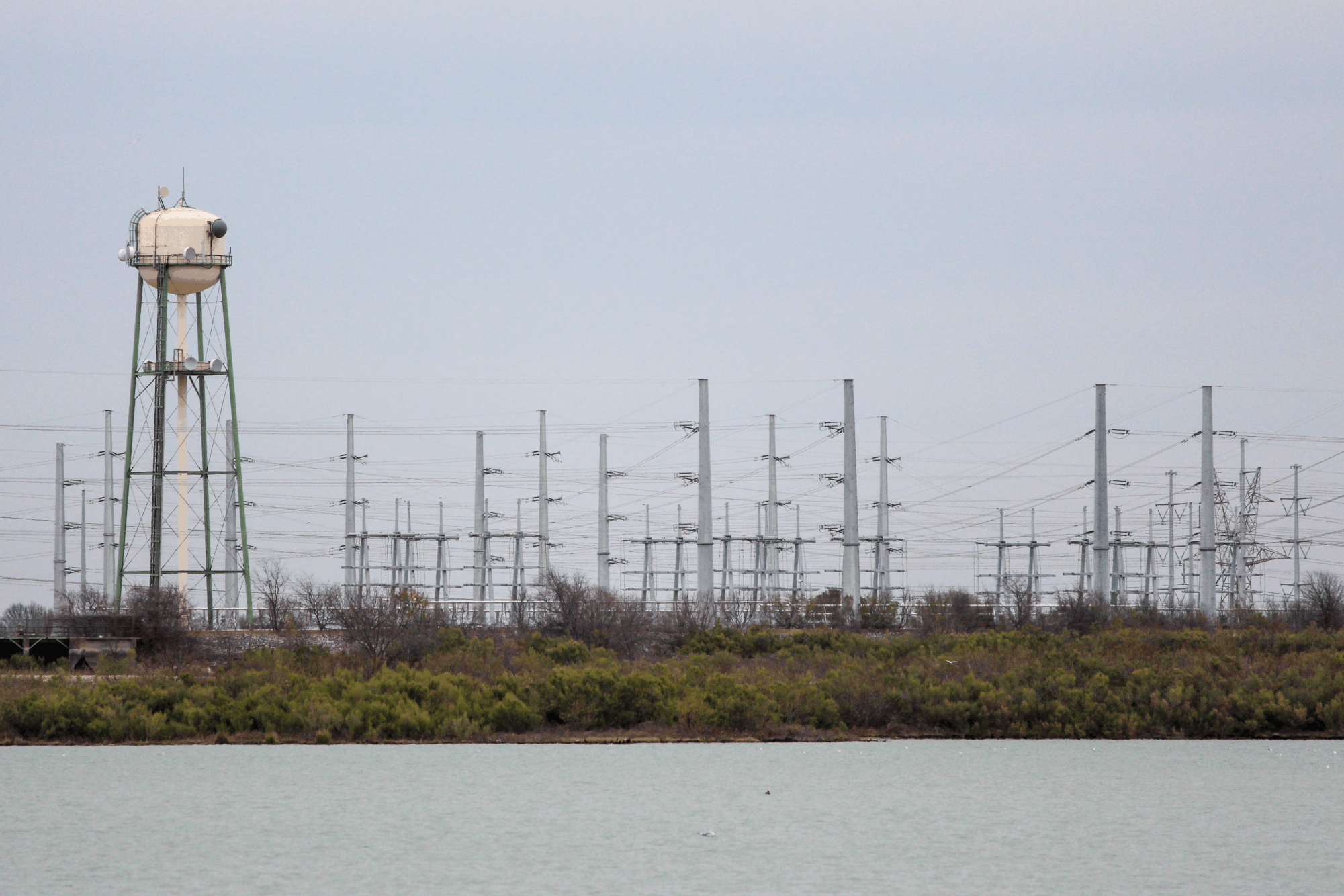
The power plant was demolished in 2012, with only a grass-covered foundation and water tower left in its place. To its north, a substation operated by Oncor dominates the footprint.
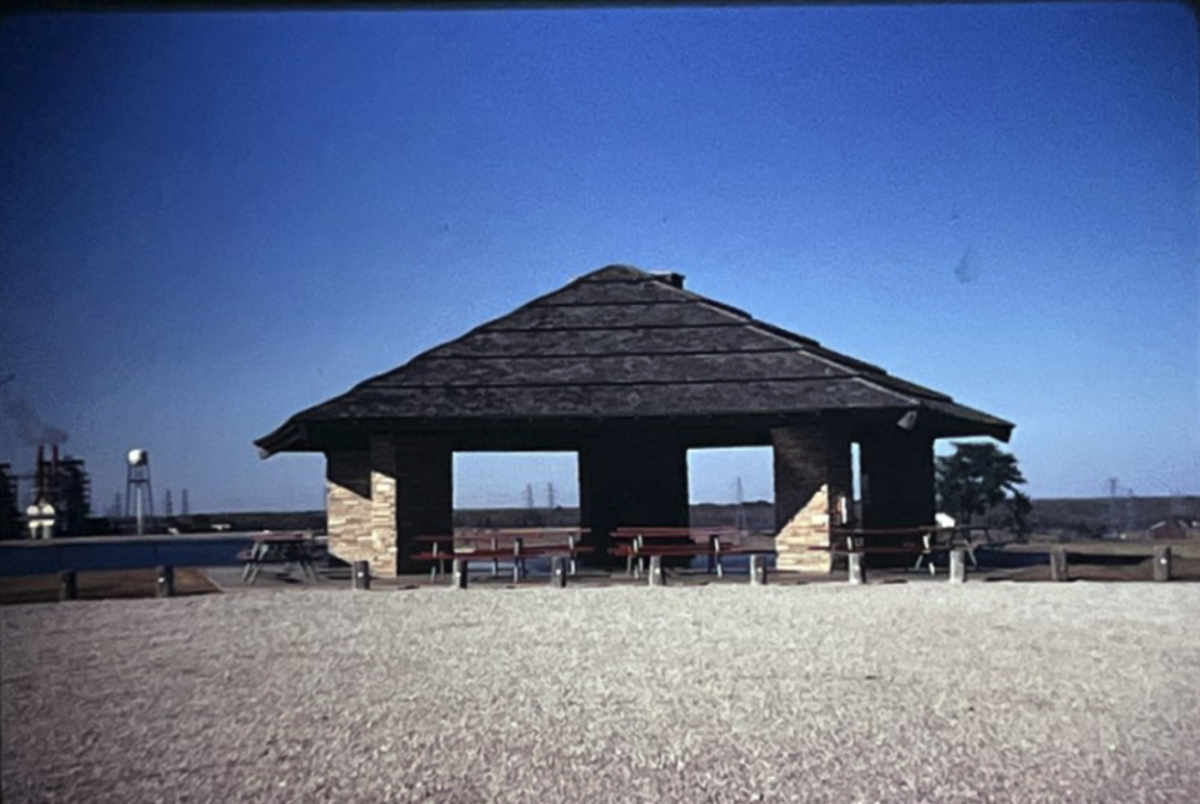
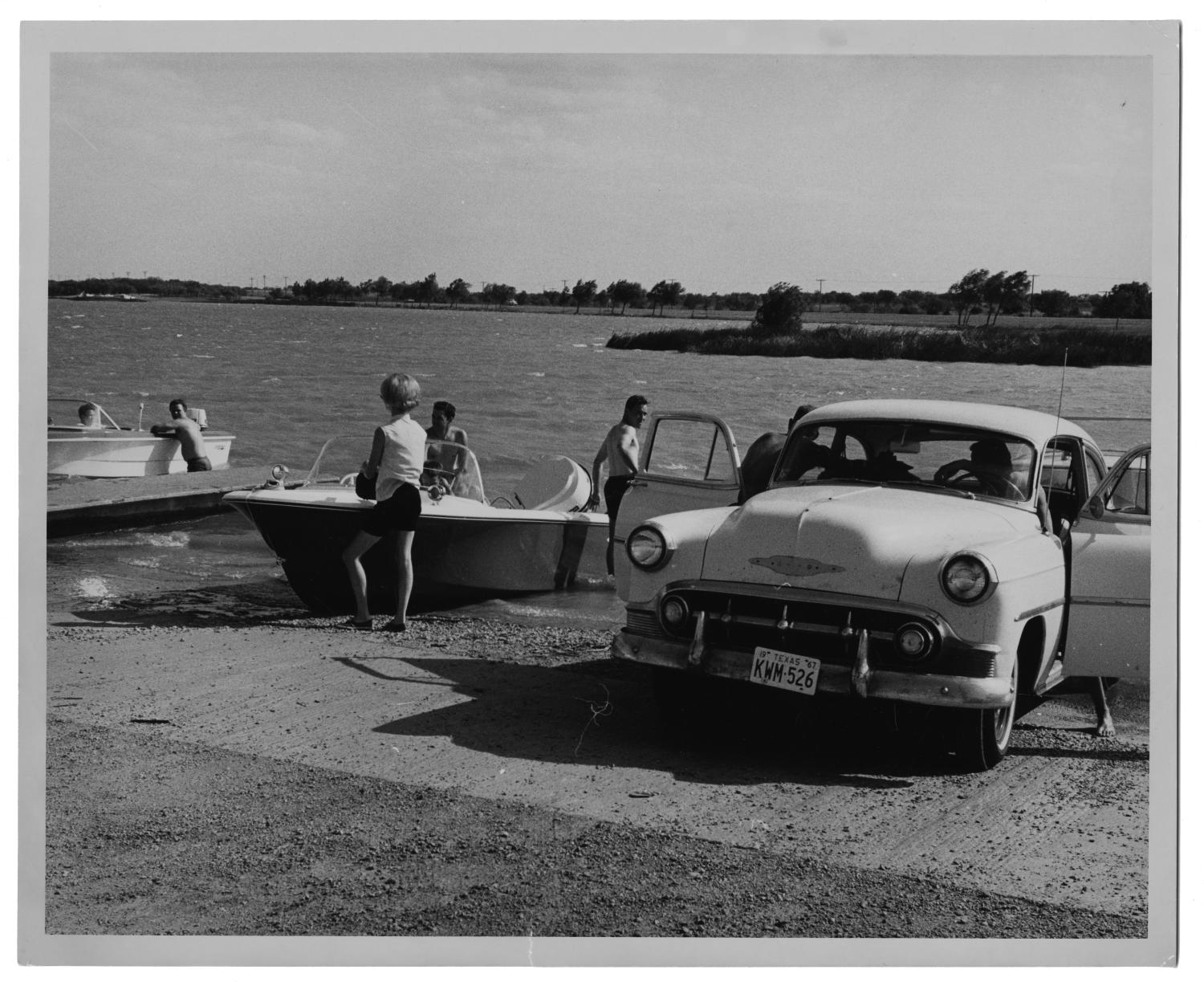
Dallas briefly made part of the area parkland in the 1960s, accessible to the neighboring communities.
“The lake was more just a passive green space with a water structure, and citizens from Irving, Coppell, Grapevine and all could use that for recreational activities,” Stover said. “I recall there were Indian Guides, Boy Scouts and others that would do camping.”
For many, the emptiness was a constant in this growing sliver of North Texas.
“It was never on the school district’s radar as a possible development because all the property was owned by Luminant,” Coppell ISD chief operations officer Sid Grant said.
In 2004, Grant was serving as assistant superintendent for business and support services.

The development called Cypress Waters has no Cypresses.
Driving here is a change of scenery. One moment, quiet neighborhoods with neat lawns. The next, a bustling urban core. On some nights, live music floats through the streets from The Sound, an entertainment hub that centers a development reminiscent of major cities rather than Texas suburbs.
Behind it all is a single woman: Lucy Crow Billingsley, real estate mogul, namesake and partner of Billingsley Company. She is the daughter of Trammell Crow, founder of his own namesake real estate company.
“My dad was in the business. I have brothers in the business and now my children are in the business,” Billingsley said. “We don’t know how to do anything else.”
In her view, Billingsley Company isn’t just brick-and-mortar creations.
“Billingsley Company wants purpose-filled lives, and we want to make the Dallas-Fort Worth community better,” Billingsley said.
Since 1978, Billingsley Company has had a part in North Texas’s explosive growth. To Billingsley, Cypress Waters was the next site of that process.
“We’ve known about the North Lake location for years before we were able to buy it. It was just a wonderfully located piece of property next to a great lake,” Billingsley said.
Looking at Billingsley Company’s website, its team features a chief morale officer, chief greeting officer and chief attention seeker.
They are all, of course, dogs.
It is hard to imagine such a company would find itself in the turmoil it did beginning in Oct. 13, 2004, when Billingsley Company first purchased the property and submitted a request for change of zoning to Dallas.
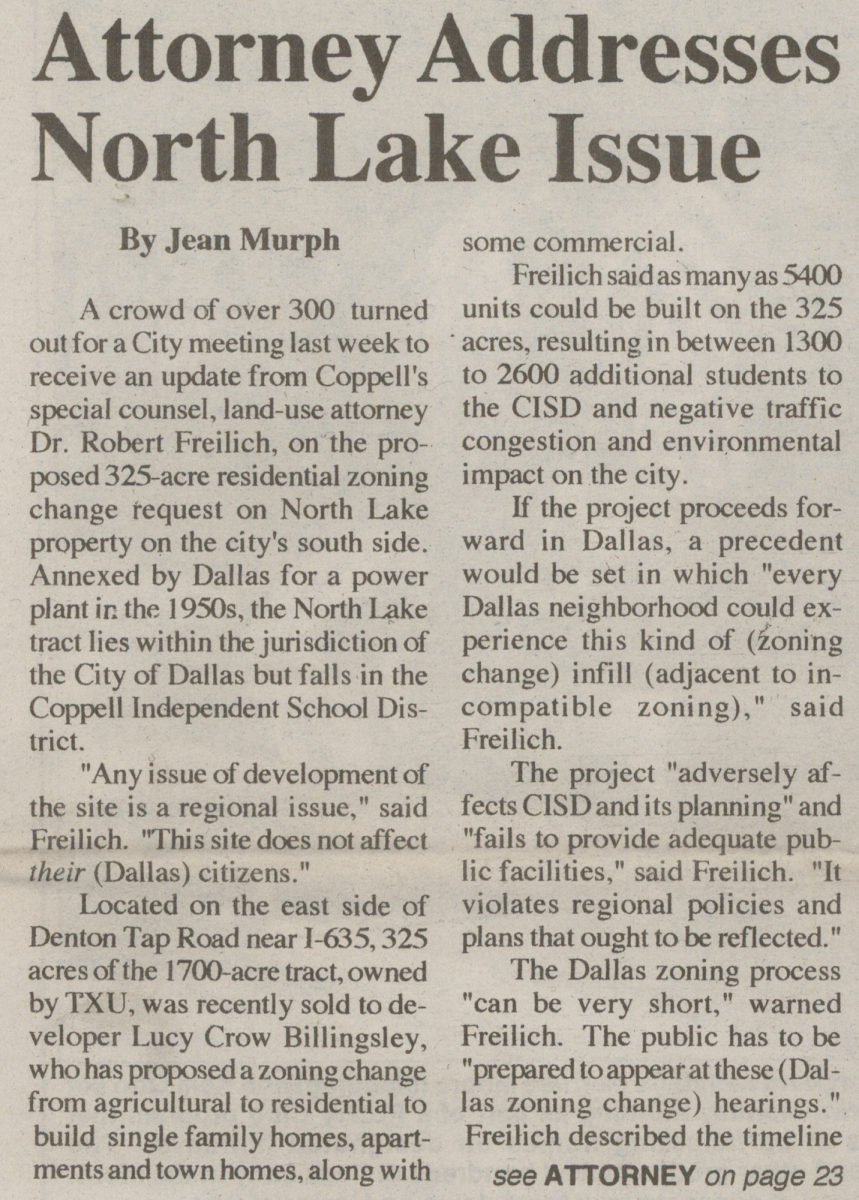
On March 2, 2005, special land-use attorney Dr. Robert Freilich landed aboard Delta flight 1688 at Dallas Fort-Worth International Airport Terminal E.
There was a light drizzle as he stepped into the pick up zone. There, he was greeted by former Coppell City Manager James Witt.
Dr. Freilich, a Los Angeles-based lawyer, represented the City of Coppell. The Sidekick obtained communications between Coppell and Freilich via the Public Information Act, showing the city paid him $635 per hour for his representation, not including the work of attorneys assisting him. Adjusting for inflation, this is more than $1,000 per hour in today’s money.
The Sidekick was unable to reach Dr. Freilich for an interview. As Coppell’s special land-use attorney, he negotiated on behalf of and represented Coppell in their legal pursuits.

“The neighboring cities didn’t complain until the property got zoned,” Billingsley said.
According to a report created by Coppell a few years after the controversy, Coppell had a few initial concerns: traffic, public safety, property value and schools.
Traffic in southern Coppell had already received an “F” grade measured by the Level of Service (LOS) system. The estimated 10,000 households of the development would strain roadways in Coppell and Irving, even though their tax dollars would go to Dallas’s pavement.
The Coppell Police Department and Coppell Fire Department worried about providing emergency services to this development, an almost half hour drive from Dallas’s police headquarters. Meanwhile, Coppell residents worried about diminishing property values from Billingsley’s project.
“There were a lot of citizens that had angst about it when we had city council meetings, which were packed with citizens wanting to hear the update on our resistance,” Stover said.
Perhaps above all, Coppell’s utmost priority was limiting negative effects on its school district.

Eighteen years after the settlement, Cypress Waters still has no cypresses.
Instead, it features a modern New Urbanist community with apartments, shops, offices, restaurants and community events.
“New Urbanism is a concept which invites density, rich amenities, great retail, streetscapes and architectural integrity,” Billingsley said. “For example, on all the multifamily apartment blocks, we change the facades as you go around the building and up and down the streets, all so you have a sense of a place that is created over time.”
According to the U.S. Army Corps of Engineers, after the settlement the lake’s height went from approximately 510 feet to 485 feet as part of land reclamation.
For Billingsley, the design process was driven by future tenants in her buildings.
“We needed to be sensitive to the price point out there, and yet wanted to create something that was a much stronger place to be than the existing offices,” Billingsley said.
Cypress Waters is not just rows of offices. For more than 2,000 people as of 2023, it’s home.
“For the multifamily buildings, we try to have a lot of park areas and green spaces, along with in-depth architectural detail,” Billingsley said. “Then when we came down to the water we said ‘let’s go be more sophisticated’ and ‘let’s add all these amenities’ because public spaces are so critical.’”
Despite managing a multi-billion dollar company, Billingsley was deeply involved in the design of Cypress Waters.
“We went down to Celebration and some of the other beach towns in Florida such as Rosemary Beach,” Billingsley said. “They were really the very beginning of New Urbanism.”
As a native daughter of Texas, Billingsley believes in the importance of a state identity in her projects.
“With the office buildings, we’re trying to create a Texas you wish you were from, and to create an office standard that we hope will be taken elsewhere throughout the state,” Billingsley said.
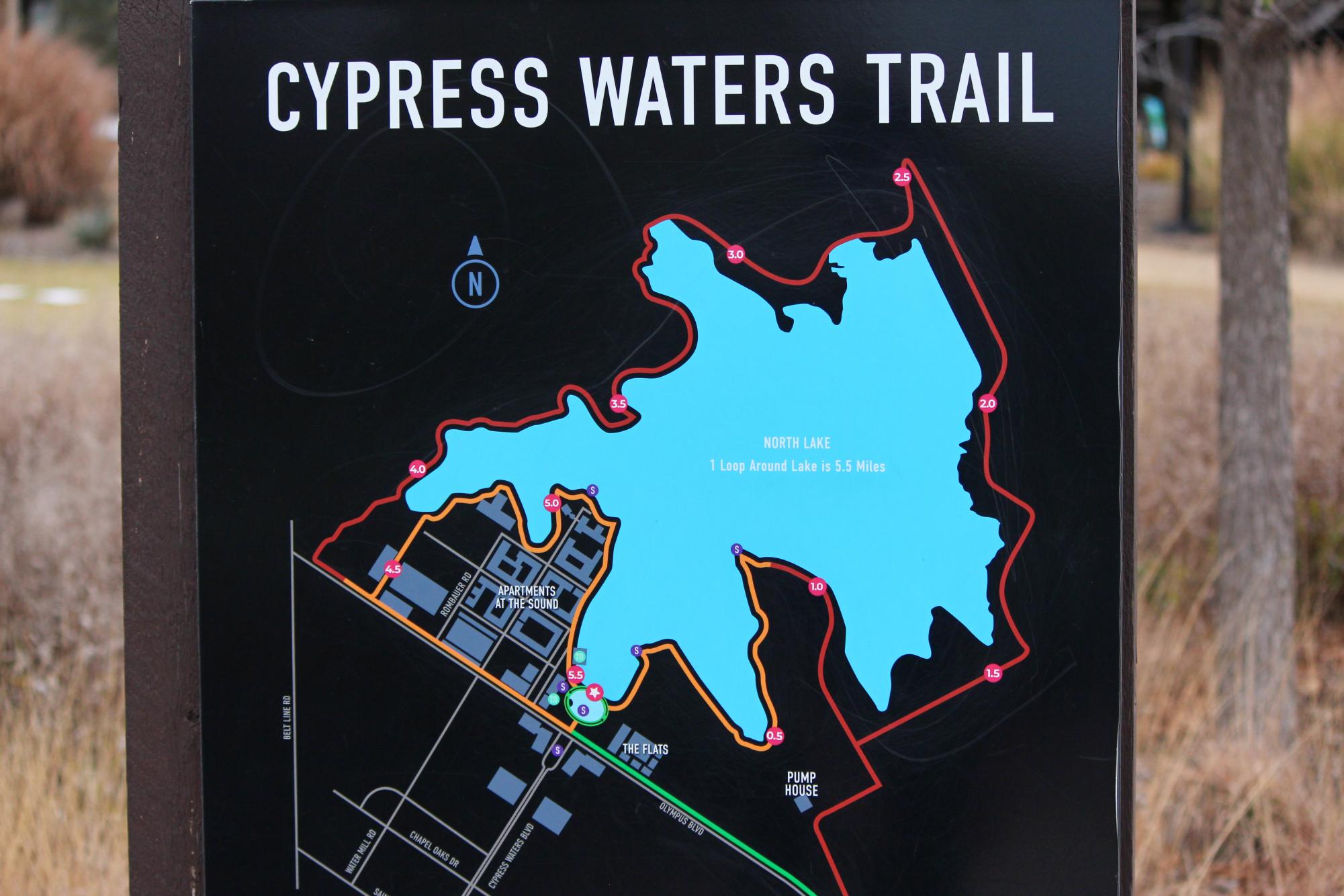
The development is unique largely due to its interactions with North Lake. Billingsley Company and Dallas County are completing a trail surrounding the entire lake.
“We’ve planted hundreds of trees there, and once the county finishes their part on the west side, we’ll be able to plant a ton more,” Billingsley said. “In 20 years I think it will be stunningly beautiful, but even today we have sculptures, shade structures, rocks with quotes and more to make it an exceptional six mile loop.”
The new Dallas Area Rapid Transit (DART) Silver Line commuter rail station, located on the north end of Cypress Waters, is not currently connected to the urban center of the development.
“We very much want to get Copenhagen Road built to connect Olympus Road up to Belt Line Road on the north side, and once that’s done, we’ll have connectivity to the station,” Billingsley said. “But until then, we really won’t be actively engaged with it.”
However, Billingsley expects to lay the foundations, both figuratively and literally, for the currently undeveloped land north of North Lake.
“Cypress Waters is the first stop out of the airport on DART Silver Line, so at some point, we’d like to see a hotel on the water go up on that north side,” Billingsley said
For Lopez, who moved here four years ago from Houston, a star feature of the community is its event scene.
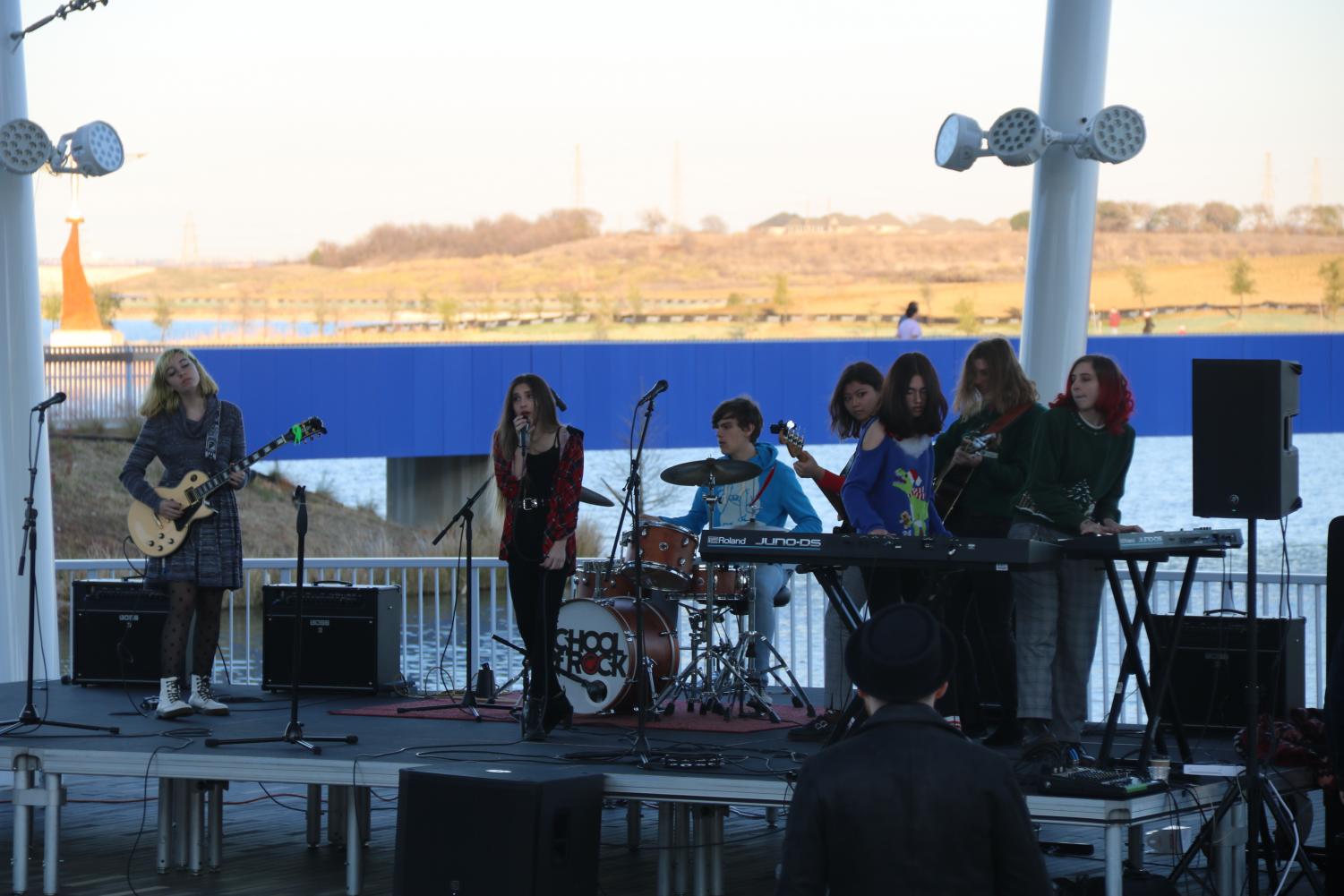
“Billingsley Company always has events going on, whether it’s Christmas or Diwali, which is actually pretty huge,” Lopez said. “Lots of people come to The Sound for them, and we try to attend every year.”





Rebecca • May 1, 2026 at 10:27 am
Great article! I’m curious about the farm lands. It’s such a joy to see the cows and longhorns. I hope they don’t go away. I was trying to find information and found me way here. Thank you for pulling together the history!
Sameeha • Feb 28, 2026 at 3:01 pm
This is incredibly impressive and thorough! Great work!