As you push through the heavy double doors of Coppell High School, the smell of cafeteria waffles, the scent of fresh coffee and a cloud of mixed perfumes hit you all at once.
Students yell, sneakers squeak, a burst of laughter ricochets off the walls. And that’s when you hear it.
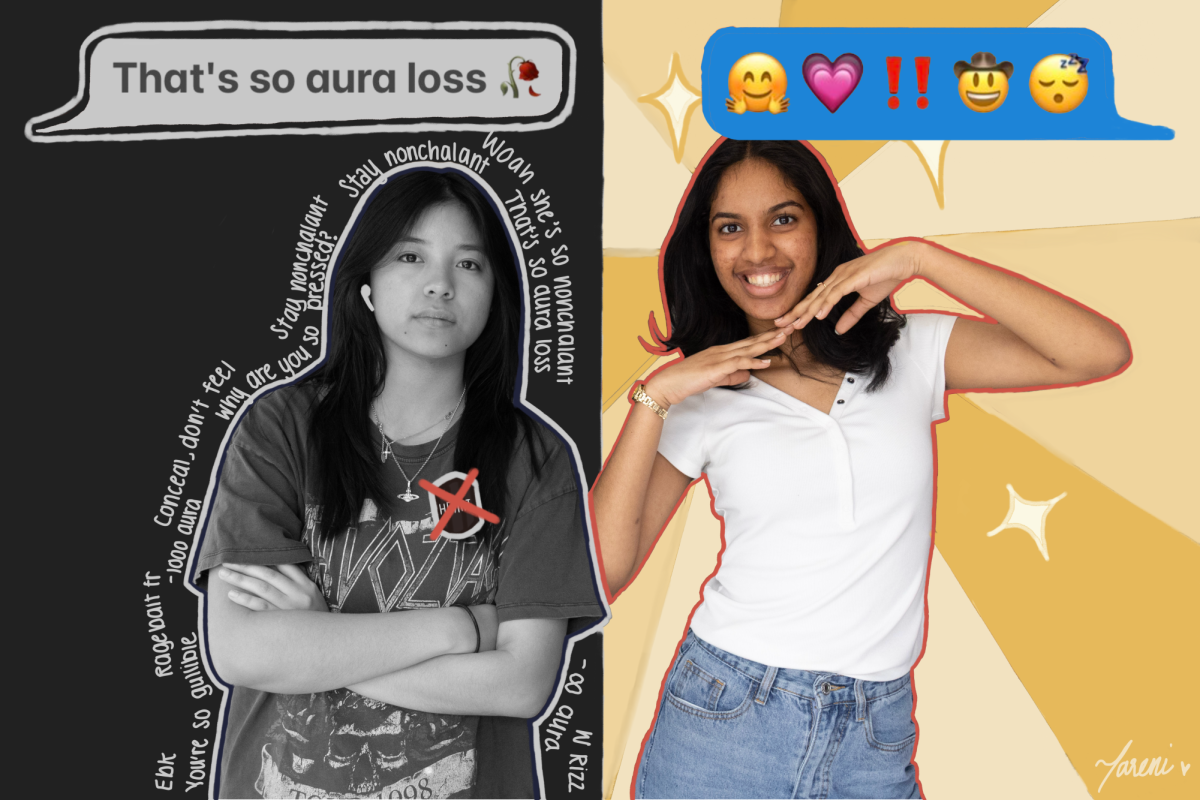
“Stay nonchalant.”
“That’s so aura loss.”
“Why are you so pressed?”
No high school student is unfamiliar with these words, as they echo through the halls of CHS on a daily basis. But while these phrases were meant to lighten moods they have quickly turned into the shielding of whole identities.
“The fact that we use vocabulary such as nonchalance and losing aura shows our inability to get vulnerable in daily situations,” junior Seerat Bhatia said. “It’s just another way of saying that you’re embarrassed, and subconsciously we’re all trying not to be embarrassed but using that concept in our daily lives so much proves our inability to regulate emotions.”
According to counselor Lindsey Oh, the use of these terms may trace back to the age-old roots of teen anxiety.
“The concept for teens really continues to exist of peer pressure, fear of standing out, fear of being different, fear of being judged. That’s still there. That hasn’t changed,” Oh said. “It’s just a different vocabulary terminology with it.”
According to freshman Ananya Javvadi, it is considered extremely important to be likeable among students and teens. People care how others perceive them and it leads to the pressure of staying quiet in hopes of maintaining bonds.
Nonchalance bleeds into people’s personalities and ends up hurting relationships.
“When you’re nonchalant, it seems like you’re cutting people off and being cold,” Javvadi said. “It starts affecting people in a way where they think you hate them or that you both have bad feelings. People take nonchalance to an extent where it starts affecting all of their life and relationships.”
Acting indifferent limits emotional expressions, straining ties.
“If you’re more expressive, people know what you’re thinking of and how you’re thinking,” sophomore Chris Young said. “If you’re nonchalant and to yourself, no one really knows what you’re thinking until you say it. If I try to tell my friend they matter to me and I’m nonchalant about it, they’re not going to see it as genuine. If I’m over the top, I can show how much I care.”
Where the trend of nonchalance comes from is uncertain. According to Bhatia, on a more emotional level it can stem from the fear of judgement.
“We’re so scared of being normal humans,” Bhatia said. “Think about what your motives are and why you are being nonchalant, because if that stems from an insecurity of being vulnerable then that’s a problem.”
However, it can be hard for teens to be vulnerable when they struggle with identifying what sentiments they are going through.
“It is hard for students to show and express their emotions sometimes because of the fear of judgement but also not really understanding, as a teenager, what emotion it is that they are feeling,” Oh said. “It may be the first time they are feeling that emotion and so it feels uncomfortable and different. The biggest thing is encouraging them that it is OK to feel an emotion they’ve never felt before and validating their feelings with it.”
Oh said social media is a key player in the rise of this fear of judgement. With every scroll, there are people that seem like they are living the perfect life.
She suggests that evaluating the purpose behind the content helps understand that the comparison is unworthy.
“Reminding yourself that this is for a paid partnership, for an audience of certain peers. It may not change the way you feel internally but at least recognizing that I don’t truly know what’s going on behind the camera and stopping yourself to rewire your brain is a starting point,” Oh said.
On a personal level, students have found the strongest way to combat this insecurity is to stay true to their identities.
“The best way to genuinely be yourself and be happy in your own skin is to be expressive,” Young said. “In fact, be overexpressive.”
Follow @CHSCampusNews on X.