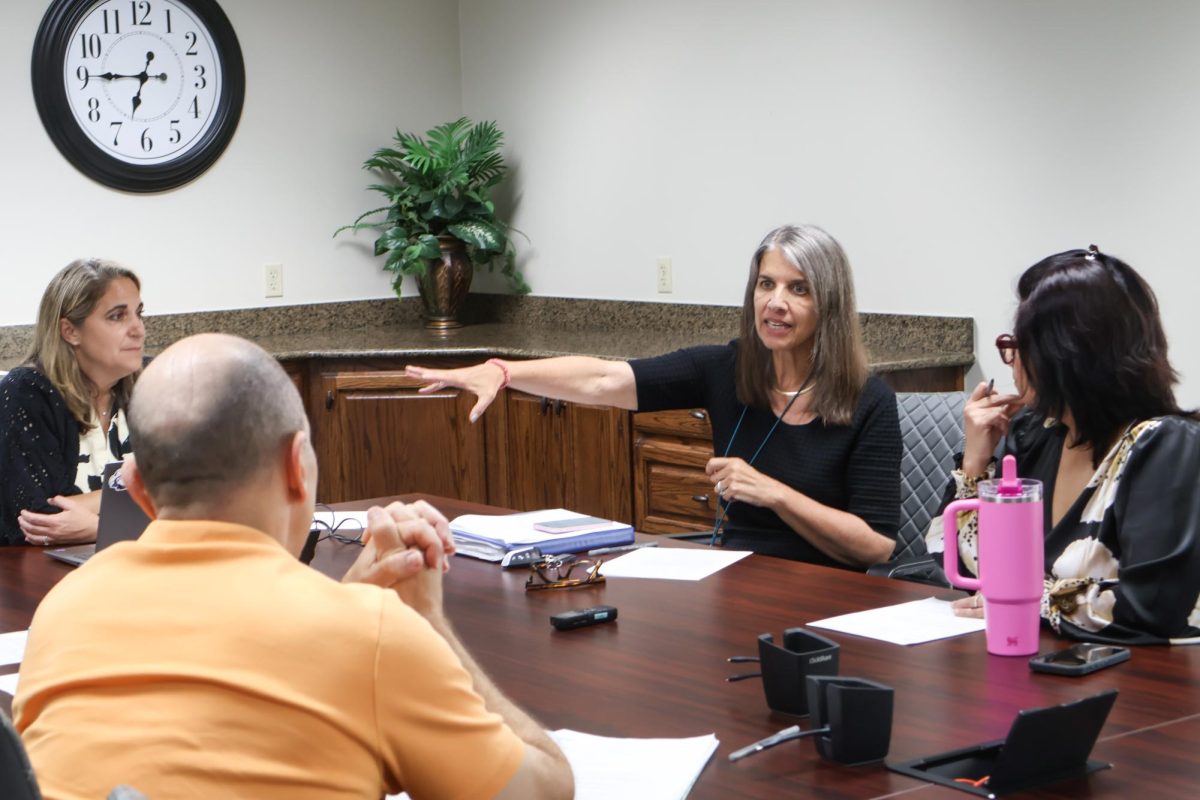
On Monday, Coppell Smart City Board met to discuss new technology the city could see in the near future.
The first point of discussion, brought up by board member Viraf Patel, was whether Coppell is suitable for a microgrid electrical system.
A microgrid is a self-contained energy system operating independently from the power grid. If a snowstorm or summer blackout disrupts power, the microgrid can keep homes and facilities running. This can be maintained with solar panels, wind turbines and other local power sources.
“The biggest obstacle is cost,” Patel said. “The minimum is about one million dollars, but for Coppell it could reach into the tens of millions.”
Microgrids can be installed in residential areas, but their primary use is to power essential businesses and operations, such as the fire department. However, Coppell does not have many facilities needing backup power.
“Coppell doesn’t have hospitals, and if schools lose power, schools are going to close,” board member Deepak Jayavant said.
Neighboring cities, such as Dallas, Fort Worth and Carrollton, have considered implementing microgrids and Coppell could benefit by working alongside them, though trying to install the necessary infrastructure in such a small city could prove a difficult task.
“The ideal candidate is a larger city,” board member Kanishka Chauduri said. “Installing a full scale microgrid in Coppell might be too much.”
Microgrids will not be ruled out as a potential solution for sudden losses of power.
The second topic, brought up by board member Gautham Vemugani, addresses Coppell’s potential future with humanoid robots.
“Nobody is looking at this, and it will sneak up on us,” Vemugani said.
Robotic innovation has rapidly accelerated in recent years, thanks to a decrease in cost and improved artificial intelligence systems. Some are already taking jobs in factories.
A presentation by board member Tejasvi Kanchanavally revealed potential security risks brought up by these robots. The Unitree G1 humanoid sends data to Chinese servers every 300 seconds, including position and microphone data.
“We have to get this in front of the city council,” Vemugani said. “In a couple of years we will see this happening in our lives.”
The final point was a short discussion on the City Detect AI tool. The program is a camera that can be attached to a vehicle’s roof and scan the street for any city violations.
“It’s detecting things that can be seen publicly,” board member Micheal Cash said. “This saves us time.”
The program can scan the neighborhood for overgrown grass, boarded windows, damaged fences and litter. One car has been outfitted with the system to test implementation.
The next meeting is May 4 to further unravel the potential for microgrids and robots.
Follow @CHSCampusNews on X.