“I will stand up. I won’t stay silent. I will support those being targeted.”
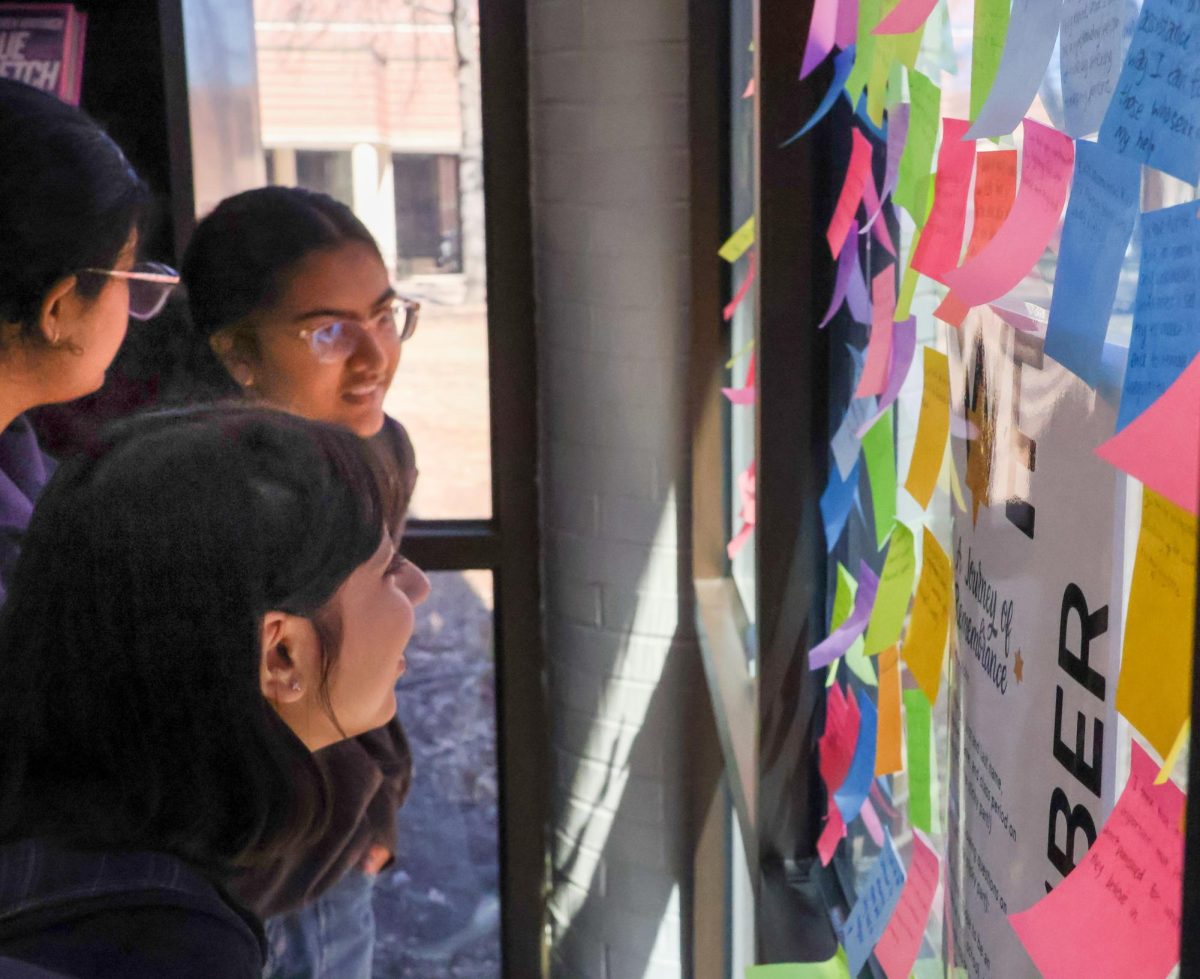
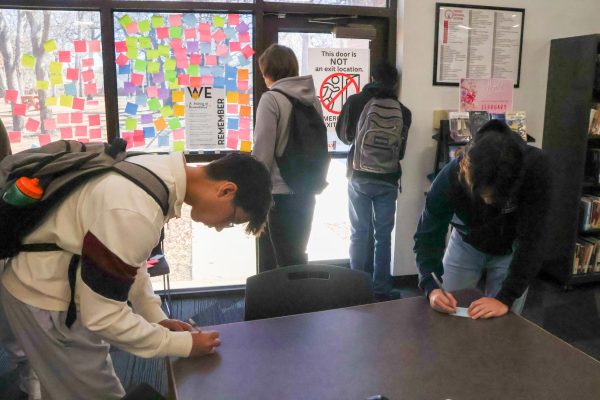
These were the words written among a colorful mosaic of sticky notes blanketed on the reflection wall, each square a handwritten promise layered atop the next.
As students quietly walked through the Journey of Remembrance: Resistance, Resilience and Remembrance of Genocide exhibit at the Coppell High School Library from Feb. 2 to 6, they confronted challenging histories and considered what role they play in contributing to those histories today.
The exhibit, organized by AP Macroeconomics teacher Dani Roseberry, AP World History teacher Connor Blake and Canyon Ranch Elementary School librarian Alicia Grijalva for Holocaust Awareness Week, examines the Holocaust and other genocides, such as the Armenian Genocide and the Rwandan Genocide.
“This isn’t just a Jewish topic,” Roseberry said. “While any one group could be targeted as the focus of genocide, it’s up to all of us to stand up against such awful behavior.”
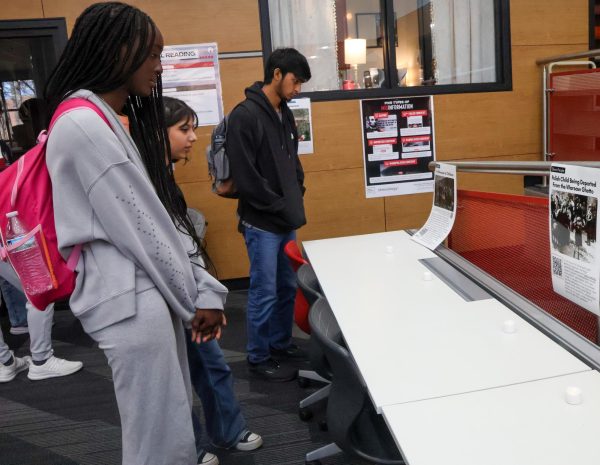
This year’s exhibit included new sections, including new displays about the Roma people, the use of child soldiers, the genocide of children and acts of political resistance.
“We wanted people to be able to relate to the topics and find something that they felt would speak to them,” Roseberry said. “They would have greater options and finding something that really resonated with their learning or their feelings, or other things that they’ve been curious about on the topic of genocide.”
Organizing the exhibit was not without its obstacles, specifically time, weather and the need to present challenging content with care. However, developing the exhibit internally provided opportunities for educators to customize their exhibit to meet the needs of students.
“We know our students,” Roseberry said. “And we know how to present this in a way that’s meaningful and approachable.”
Many statistics left a lasting impression on the students.
“The one about the children really got to me,” senior Marieme Sy said. “They said you could fill AT&T Stadium 18 times with the kids that were hurt.”
Senior Prerita Singh feels that her perspective of history has expanded after reflecting on the artifacts and photographs.
“History is really important,” Singh said. “We need to remember their sacrifices and remember what they’ve done for us.”
The structure of the exhibit was also adjusted to have longer text segments, allowing for many of the classes to go device-free partly due to the phone ban. The change encouraged students to slow down and more intentionally engage with the material.
“It seemed important to allow people to have a breather from constantly being on an iPad,” Roseberry said. “People focused more on the text that was in front of them anyway.”
As students navigated the exhibit, they visited a station that asked them to write commitments as an upstander based on their reflections. The growing wall of sticky notes became a key aspect of their experience and symbolized the collective remembrance of all students who visited the exhibit.
“I wrote that I’d be an upstander,” Singh said. “I want to make sure everyone is treated equally.”
Rather than seeing genocide as an event of the past, the exhibit encouraged each student to see its most recent effects on the world today.
“It’s a very sad part of history, but it’s important that we keep it in mind because it’s still happening today,” Sy said.
Follow @CHSCampusNews on X.