Lying in a hospital bed during cancer treatment, a teacher relied on blood transfusions from strangers she would never meet—donations that quietly kept her going.
Coppell Middle School West choir director Allison Hartzell’s experience reflects the critical role blood donations play in medical care across the country. Blood transfusions are essential for patients undergoing surgeries, emergency treatment and cancer care, making consistent blood donation a necessity rather than a choice.
In 2017, Hartzell discovered she had Stage 4 head, neck and tongue cancer through visiting the dentist to have what she believed was a casual ulcer check. The diagnosis upended her life, as treatment required part of her tongue to be removed. This meant she had to relearn speaking, eating and what was most special to her: singing.
“I obviously couldn’t do my job. It was really hard because that was my passion, but I also had a one year old son to take care of,” Hartzell said. “It took a mental toll on me to relearn everyday activities just to go back to life before cancer, but I had to persist. Even though radiation might have messed with my vocals, I am still going to sing.”
As part of her treatment, Hartzell underwent extensive chemotherapy sessions, which often requires blood transfusions to prevent dangerous complications caused by low blood counts. Chemotherapy drugs can damage fast-dividing cells in the body, including those in the bone marrow, increasing the risk of severe fatigue, bleeding and infection.
“The procedure required three bags of blood before I could even get my chemotherapy,” Hartzell said. “It was hard to find them because my blood type, O negative, is hard to find blood for, but they made it work. I know people with cancer use up a lot of blood donations here in America. While you are healthy, donate blood to people who need it because eventually, that’s what got me to be a cancer survivor.”
Because blood cannot be manufactured, hospitals depend entirely on volunteer donors to maintain adequate supplies. While recipients can continue treatment and prevent facing serious complications, donors also benefit from the process through free health screenings.
This includes checks for blood pressure, hemoglobin levels and overall eligibility. Donating blood can also improve blood flow as your body regenerates new cells.
“We make sure patients are fully capable of donating blood before drawing it from them,” Quest Diagnostics registered phlebotomist Sarah Jain said. “It can be really beneficial since it can lower the risk for heart conditions by simply lowering blood pressure.”
While all blood types are essential, some are higher in demand than others. Type O negative blood is considered the universal donor and is especially critical in emergencies when a patient’s blood type is unknown. According to Carter BloodCare, currently type B negative blood is in critical need.
For January’s National Blood Donor Month, Coppell High School Health Occupations Students of America (HOSA) chapter hosted a blood drive on Jan. 20, encouraging students and staff to donate and support patients.
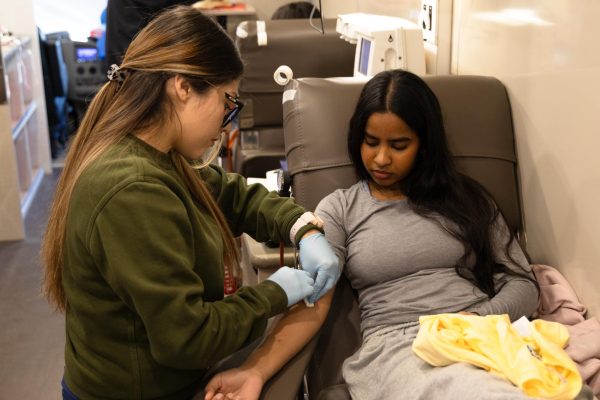
The blood drive aims to raise awareness about the importance of donating blood while providing students with a hands-on opportunity to make a difference. The event allowed eligible donors to contribute to local blood banks and help replenish supplies used by hospitals nationwide.
“The goal of the drive is to get 60 units of blood, and each unit can help three people, so we can technically help the lives of 180 people,” said health science theory teacher Rick Harris, who organized the event. “As a donor, it’s a nice feeling to know that my blood can help someone else, and so I will donate as often as I can.”
Follow Ananya (@ananyanarala) and @CHSCampusNews on X.