Throughout October, some lunch boxes saw a change in contents.
This switch from meat to vegetables change came with the implementation of the Meatless Monday initiative at Coppell High School.
The movement started in 2003 with Sid Lerner, founder of The Monday Campaigns, a public health initiative dedicating every Monday to healthy consumption of food in coordination with the Johns Hopkins Center for a Livable Future.
At CHS, Eco Club sophomore Satvik Avadhanam brought his idea for this challenge to health science teacher Jodie Deinhammer.
“I was really passionate to see if we could get a collective effort and make an impact through the school for this kind of initiative,” Avadhanam said. “I know lots of other people have some kind of expressed interest in this field as well, so I thought that would be something cool to do.”
Avadhanam’s motive to implement the initiative came from personal experience.
“I’ve been a vegan since I was 10 years old,” he said. “I’ve always had a passion for animal welfare and sustainable eating.”
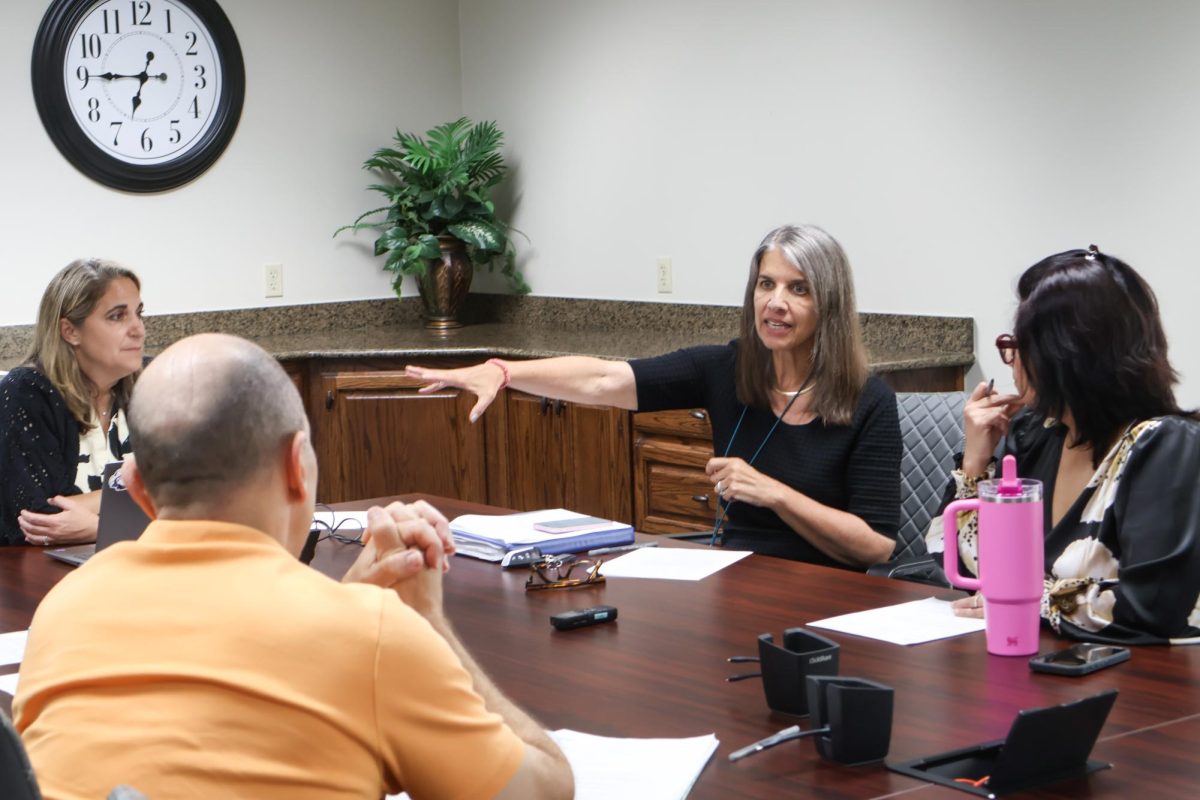
Deinhammer, Avadhanam and Eco Club sophomore Anna Olougouna worked to reach out to faculty and students at the school.
After some brainstorming, they created and put out a form that gathered teacher opinion and encouraged them to join in the challenge.
Physics Honors teacher Amanda Del Rio Suarez decided to take up the challenge.
“It’s something that piqued my interest,” Del Rio Suarez said. “I’ve always been kind of interested in eating healthier, and doing something better for the environment. That is what sold me.”
Sustainable dieting is a lesser discussed topic in schools. Meatless Monday aims to change that and set a course of change for the near future.
“In school, no one talks about the impacts that going plant-based can have on the environment,” Olougouna said. “We’re all taught that we need to turn off the water faucet or the lights and such, but in reality, what you eat really impacts the environment. Livestock agriculture is extremely demanding on our environment, and there’s a lot of deforestation that happens just to facilitate that kind of agriculture.”
Teachers and students can share recipes and photos through the discussion board in the Eco Club Schoology group or on their social media. Many teachers have taken to incorporating their ideas with healthy and vegetarian or vegan ingredients.
Del Rio Suarez participates by preparing foods native to Mexico, with one being caldo de verduras, a vegetable soup consisting of a savory broth and vegetable scraps.
“Mine has cabbage, carrots, celery, potatoes and corn. I also take other traditional Mexican dishes and make them meatless,” Del Rio Suarez said.
The club hopes to expand the challenge in future years or implement similar initiatives in upcoming months, such as Veganuary during the month of January.
“It sends a strong message about animal welfare by saying that it’s really important to protect animals and doing what we can as well,” Avadhanam said. “It is also good for the environment and the environmental benefits of doing the initiative. If we bring this to the school, it sends a message that CHS cares about the environment.”
Follow @CHSCampusNews on X.