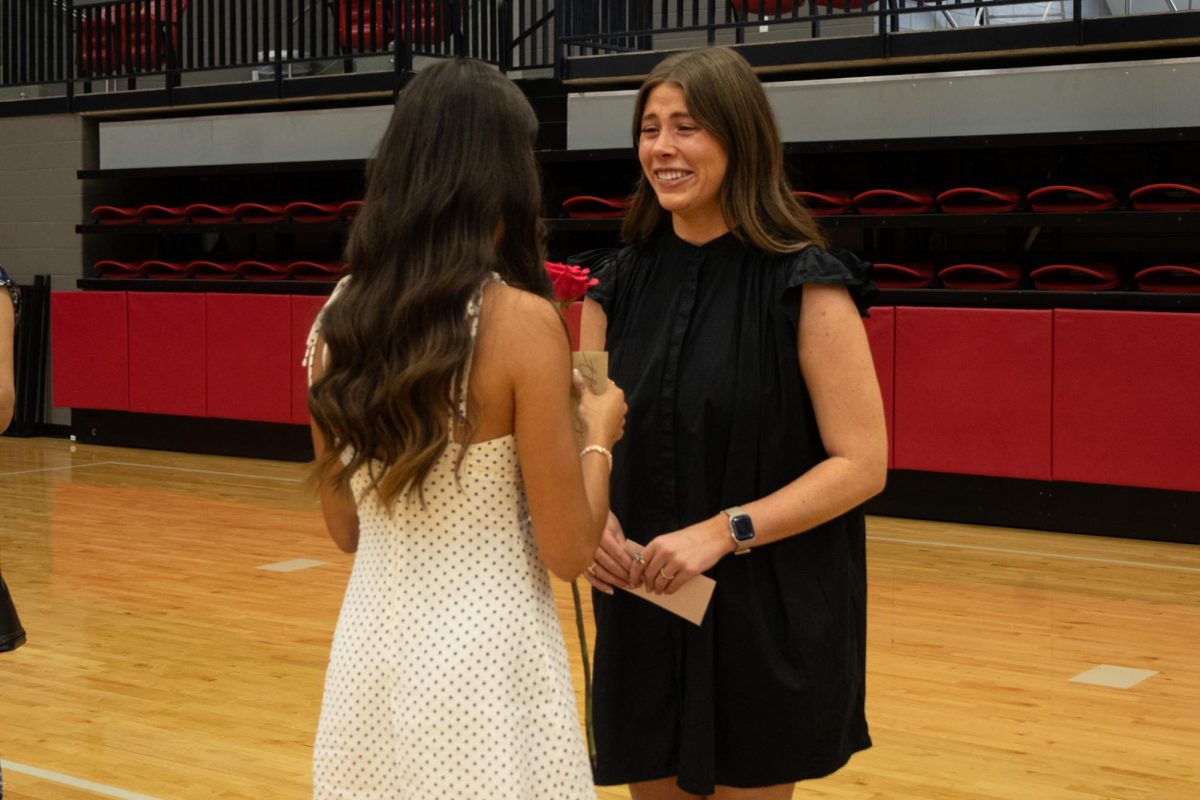
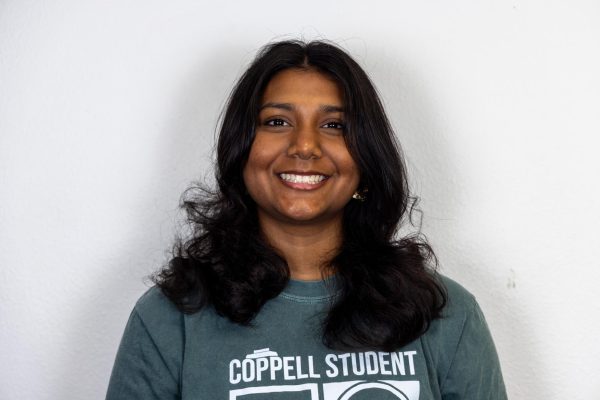
Coppell High School American Sign Language teacher Dez Garner, or Ms. Dez to her students, exuberates energy. Garner is rarely stagnant, always walking around her classroom, demonstrating different signs and playing games with her students, eager to teach the main language she communicates with.
Garner started teaching at Coppell two years ago. She has experience teaching both hearing and deaf students. Socializing is easier with deaf students because Garner herself is deaf, but she loves teaching hearing students.
“They have this energy of wanting to learn,” Garner said. “They want to sign. They want to communicate. You can feel that, and you feel this confidence with them, and then you feel this confidence with them as they grow in their communication skills.”
However, Garner’s teaching journey started a decade ago as a bus driver at the Texas School for the Deaf. One day, her friend informed her of a teaching position available at the school.
“As I got started I realized I loved doing it, and I’ve had that job ever since,” Garner said.
ASL can seem daunting to students, so Garner builds a comforting atmosphere as students gain confidence signing.
“The first week, they look at you with terror in their eyes when they see ASL for the first time, which is totally normal,” Garner said. “I try to give them a really warm, welcoming presence and try to build that rapport with them so we can get to the second week and start moving and actually teaching.”
It is her patience that helps students grow.
“Recently there was a student last year who had had a different teacher. They transferred into my class,” Garner said. “The first several weeks they were struggling, so I would always sit down and say ‘Is everything OK? What’s making you struggle so much?’ and she explained. I listened.”
Junior Lily Dontos experienced first-hand how Garner builds a relationship with her students.
“She makes class really fun. She’s always asking us what we want to learn about and what we’re wanting to do, so we’re learning the most rather than just going by the textbook,” Dontos said. “She’s very connected with all her students.”
ASL teacher Delosha Payne acknowledges Garner’s energetic nature, not only with her own students, but all ASL-speaking students.
“She will engage them in conversation to make them actually use [ASL],” Payne said. “I like that because she doesn’t shy away from, ‘Oh well, this kid isn’t fluent in the language so I’ll leave them alone.’”
Garner’s goal for teaching ASL is to equip students with the knowledge to be able to successfully communicate with deaf people. After all, she did not have the same luxury of being able to easily communicate with others.
”I grew up with hearing-people all around me. They were just talking and talking. I couldn’t hear information that was being shared and conversations going on,” Garner said. “We had to do a lot of writing, but a lot of people didn’t have patience to write out the conversations.”
When Garner was 14, she moved from Louisiana to Texas, where she encountered deaf people her age using ASL for the first time. She had previously attended a hearing school, where there was no sign language or interpreters available.
“I saw other students signing, and I told them ‘I’m deaf too, but I don’t know ASL,’” Garner said.
To be included, Garner had to learn ASL, getting help from her fellow peers.
“They said, ‘You need to learn ASL before you can hang out with us,’ so I kind of had to force myself, motivate myself and ask a lot of questions,” Garner said. “I had a few deaf friends that would help me that knew ASL, so I went home everyday and practiced in the mirror.”
Learning a new language was not an easy process.
“At first it was very scary to me. I wasn’t really accepted by other deaf people because I didn’t really know sign language or anything about Deaf culture,” Garner said.
These experiences have helped Garner empathize with her students outside of learning ASL.
“I completely understand their frustration and how they approach something new or something they’re learning,” Garner said. “Everybody’s got their own rhythm and pace when it comes to sign language.”
Garner is defined by more than her lack of hearing, and is receptive to communicating with everybody.
“Don’t avoid her because she can’t hear,” Payne said. “Make sure to give her her respect. Say hi and attempt communication because she’s very friendly and she’s very open. Be interested in her because she’s a very interesting woman.”
Follow @CHSCampusNews on X.